

Markets can climb very fast when investors believe the story.
They can fall just as fast when the story starts to look too expensive.
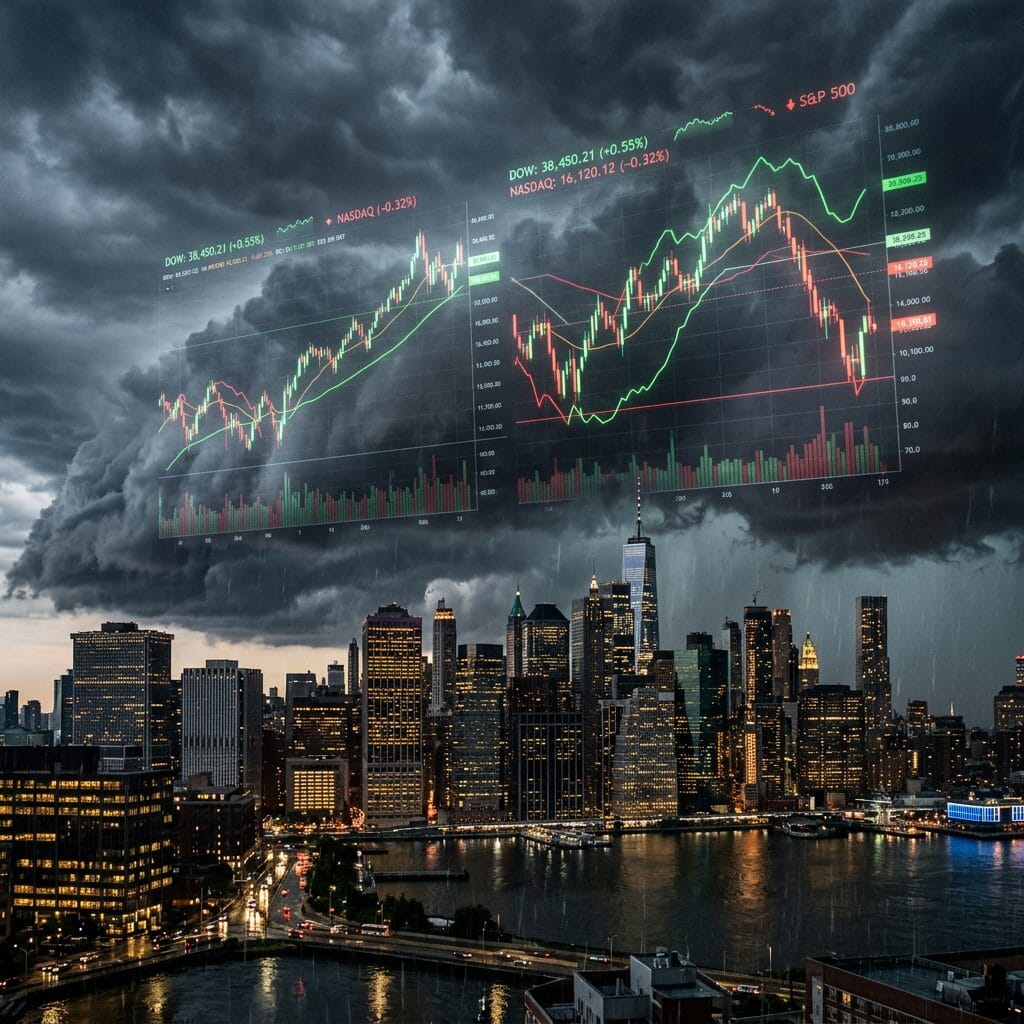
That is what is happening now. U.S. stocks are slipping further from record highs as bond yields rise, inflation anxiety returns, tech stocks wobble, and the Iran war keeps energy markets unstable. The rally has not collapsed, but the pressure is building. Wall Street is being reminded that optimism alone cannot outrun expensive valuations, high gasoline prices, and a bond market that is no longer willing to stay quiet.
The Bond Market Is Back in Control
For much of the AI rally, investors treated bond yields like background noise.
That was never going to last.
When Treasury yields rise sharply, they change the entire valuation picture. Higher yields make bonds more attractive, make stocks look more expensive, raise borrowing costs, and squeeze the parts of the economy that depend on cheap money. That includes housing, corporate borrowing, consumer credit, and even the AI data center buildout that has been one of the market’s favorite growth stories.
This is why the latest stock pullback matters.
It is not just profit-taking. It is the bond market forcing equities to answer a harder question: are these prices still justified when money is no longer cheap?
AI Stocks Are No Longer Untouchable
Technology shares carried much of the market’s enthusiasm, but that strength is now being tested.
The AI trade still has power. Nobody serious can deny that. Nvidia, chips, cloud infrastructure, and data centers remain central to the market’s imagination. But after huge runs, even great companies can become vulnerable when expectations get too high.
That is the problem now.
Tech stocks are not falling because AI suddenly stopped mattering. They are falling because investors are asking whether the prices already assume too much perfection. In a market this expensive, even a small disappointment can hit hard.
Nvidia Has Become the Market’s Emotional Center
Nvidia’s upcoming results matter far beyond one earnings report.
The company has become the symbol of the AI boom. When Nvidia beats expectations and raises forecasts, it reinforces the belief that the entire AI infrastructure story still has room to run. When Nvidia slips, investors start questioning whether the broader rally is resting on too narrow a foundation.
That is a lot of weight for one company to carry.
A single stock should not be the emotional anchor for the whole market, but that is where Wall Street has placed it. Nvidia is no longer just a semiconductor company in investor psychology. It is the market’s proof-of-life signal for the AI era.
Oil Is Still the Geopolitical Knife at the Market’s Throat
The Iran war remains the dangerous backdrop to everything.
Even when oil prices ease for a day, they are still far above pre-war levels. That matters because energy costs are not just another input. They feed into inflation, transportation, consumer spending, business margins, and Federal Reserve policy. If the Strait of Hormuz remains disrupted or uncertain, the market cannot fully relax.
This is where Wall Street’s optimism keeps running into geography.
A few strong earnings reports cannot reopen a chokepoint. AI enthusiasm cannot lower gasoline prices. Tech valuations cannot erase the inflationary effect of a prolonged energy shock.
Gas Prices Are Turning Market Risk Into Household Pain
The average American does not think in Treasury yields or forward earnings multiples.
They think in gas prices.
When gasoline climbs sharply, the pressure becomes visible, immediate, and political. It eats into disposable income. It changes spending decisions. It makes consumers more cautious. And it creates the kind of inflation anxiety that can keep the Federal Reserve from cutting rates as quickly as markets want.
That is why high gasoline prices are such a dangerous part of this story.
They connect the Iran war, the bond market, inflation, the Fed, and consumer confidence into one ugly chain.
Earnings Are Strong, but They May Not Be Enough
Many major U.S. companies have been reporting better-than-expected profits. That helped stocks reach record highs and kept investors willing to buy dips.
But earnings strength has limits.
If yields keep climbing, if gasoline keeps rising, if consumers get squeezed, and if companies face higher borrowing and operating costs, then the earnings story becomes harder to sustain. Strong past profits do not automatically protect future margins. Markets care about what comes next, not what already happened.
That is why investors are suddenly less relaxed.
They are not ignoring strong earnings. They are asking whether the environment that produced them is getting worse.
The Fast Rebound May Have Gone Too Far
The market’s rebound from earlier lows was dramatic.
That kind of speed often creates its own vulnerability. When too much money floods into stocks too quickly, the rally becomes crowded. Everyone starts leaning the same way. Then, when yields rise or a key sector stumbles, the exit gets narrower.
That is why warnings about the “pendulum” swinging back matter.
A market that rose quickly can correct quickly, especially when investors were buying not only out of conviction, but out of fear of missing out.
The Real Risk Is Not Panic. It Is Repricing.
This does not look like full-scale market panic.
It looks like repricing.
Investors are reassessing whether stocks deserve record-level valuations in a world where bond yields are higher, oil remains elevated, inflation is sticky, and the biggest AI names are no longer automatic winners every day. That kind of repricing can be orderly at first. But if the pressure continues, it can become sharper.
The market is not crashing.
It is being forced to sober up.
The Meaning of the Moment
Wall Street’s latest decline is a warning that the record-setting rally was built on fragile assumptions.
The assumptions were that AI would keep delivering, earnings would stay strong, inflation would calm down, the Fed would eventually ease, and the Iran war’s economic shock would remain manageable. Now every one of those assumptions is being tested at once.
Stocks can still recover. Nvidia could still deliver. Earnings could still hold up. Oil could still stabilize.
But the market no longer gets to ignore the risks.
The bond market is pushing back. Energy prices are still dangerous. Consumers are under pressure. And tech valuations are being asked to prove they deserve the heights they reached.
For now, Wall Street is not collapsing.
It is losing its easy confidence.

