

The AI revolution is not running out of ambition.
It is running out of supply.
Nvidia and South Korea’s SK Group are preparing to detail a new cooperation plan, and the timing could not be clearer. Nvidia CEO Jensen Huang is warning that the memory shortage will not disappear soon. Not in a few months. Not next year. He says the shortage could persist for several years.
That is the real story.
AI demand is no longer just strong. It is overwhelming the physical supply chain needed to support it.
Memory Is Now the Bottleneck Everyone Has to Respect
For much of the AI boom, the public focused on Nvidia’s GPUs.
That made sense. GPUs became the symbol of the AI age: the hardware behind model training, inference, data centers, and the enormous compute race between tech giants. But GPUs do not work alone. They need memory. They need packaging. They need wafers. They need advanced manufacturing capacity. They need the whole industrial chain moving at speed.
That is why SK Hynix matters so much.
SK Hynix is one of the most important memory suppliers in the world, especially in high-bandwidth memory, which is critical for AI systems. Nvidia may design the chips that define the boom, but companies like SK help make those systems usable at scale.
The AI race is not only a chip race.
It is a memory race.
Jensen Huang Is Saying the Shortage Is Structural
Huang’s warning matters because it rejects the fantasy that this is a short-term squeeze.
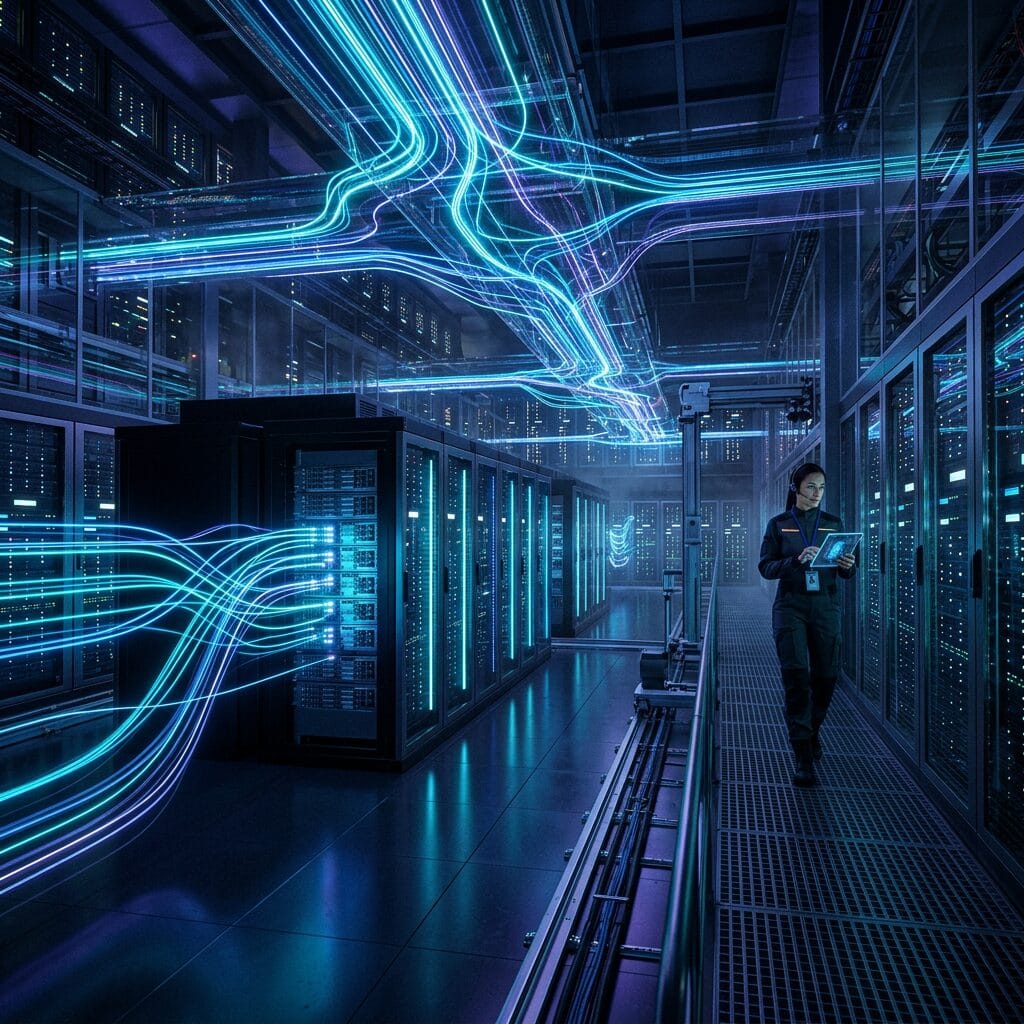
When he says everything from wafers to packaging to silicon photonics is in short supply, he is describing a full-system bottleneck. That means the problem is not one missing component. It is the whole supply chain straining under demand that grew faster than the industry could reasonably absorb.
That is serious.
A temporary shortage can be solved by waiting. A structural shortage requires investment, coordination, capacity expansion, and years of execution.
AI Demand Is Eating the Whole Supply Chain
The demand for AI infrastructure is massive because every major technology company is trying to build the same future at once.
Cloud providers want more data centers. Model labs want more training capacity. Enterprises want AI agents. Governments want sovereign AI. Automakers want autonomous systems. Robotics companies want embodied intelligence. PC makers want AI-ready devices. Telecom and industrial firms want edge AI.
All of that demand eventually hits the same physical constraints.
Chips. Memory. Packaging. Power. Cooling. Networking. Manufacturing equipment.
The cloud may look invisible to users, but the AI economy is very physical.
Nvidia Needs SK as Much as SK Needs Nvidia
This cooperation plan is not charity.
It is mutual necessity.
Nvidia needs reliable access to advanced memory and supply-chain partners that can keep up with AI demand. SK needs deep alignment with the company sitting at the center of the AI hardware universe. The closer the partnership, the easier it becomes to plan future capacity, coordinate product roadmaps, and move faster than competitors.
That is how power works in the AI supply chain.
The winners will not be isolated companies. They will be tightly linked ecosystems.
South Korea Is Becoming Even More Important to AI
Taiwan often gets the spotlight because of TSMC.
But South Korea is just as crucial in memory.
SK Hynix and Samsung sit at the center of the global memory industry, and AI is making that role more strategic than ever. High-bandwidth memory is no longer a niche component. It is one of the central constraints shaping how fast AI infrastructure can grow.
That gives South Korea enormous leverage.
If AI is the new industrial revolution, memory is one of its key raw materials. South Korea helps supply it.
The Shortage Could Keep Prices Strong
A prolonged shortage is bad for buyers but good for suppliers.
If demand remains high and supply remains tight, memory companies gain pricing power. That is why investors have been paying much more attention to memory-chip makers. The AI boom is expanding from Nvidia into the companies that feed Nvidia’s systems.
This is the next stage of the market.
First investors bought the obvious GPU leader. Then they moved into data centers, power, cooling, networking, and memory. The AI trade is becoming broader because the infrastructure demand is broader.
The Bigger Problem Is Capacity Takes Time
You cannot solve this kind of shortage instantly.
Advanced memory production is complex. Expanding capacity takes time, capital, skilled workers, equipment, testing, and coordination with customers. Packaging capacity is also difficult to expand quickly. Silicon photonics adds another layer of complexity as data movement becomes more important.
That is why Huang’s “several years” warning is credible.
AI demand can grow in months. Semiconductor supply grows in years.
That gap is where the shortage lives.
Robotics and AI PCs Add Another Layer
Huang also pointed to cooperation across AI supercomputers, CPUs, new PCs, and robotics.
That matters because the AI supply problem will not stay confined to data centers.
If AI becomes embedded in personal computers, robots, industrial systems, vehicles, and edge devices, then demand spreads across even more categories. That could make the supply crunch broader, not narrower. The world is not building one AI market. It is building many AI markets at the same time.
Every one of them needs hardware.
Every one of them competes for capacity.
The “Chimaek” Meeting Was Symbolic
Huang meeting SK executives over fried chicken and beer may sound like a light detail.
But in business diplomacy, those scenes matter.
They show relationship-building at the highest level. They turn supply-chain strategy into personal partnership. They remind the market that AI’s future is being shaped not only in conference rooms and earnings calls, but through direct ties between the executives who control the hardware pipeline.
Behind every AI model is a supply chain.
Behind every supply chain is negotiation.
The Meaning of the Moment
Nvidia and SK’s cooperation plan is important because it shows where the AI race is heading next.
The first phase was about who had the best chips.
The second phase is about who can secure the full industrial system behind those chips.
Memory, packaging, wafers, silicon photonics, and advanced manufacturing are no longer background details. They are the battlefield. Nvidia knows it. SK knows it. Investors know it. Governments know it.
The AI boom is still accelerating.
But the companies that win from here will be the ones that can secure supply before everyone else realizes how scarce it really is.