

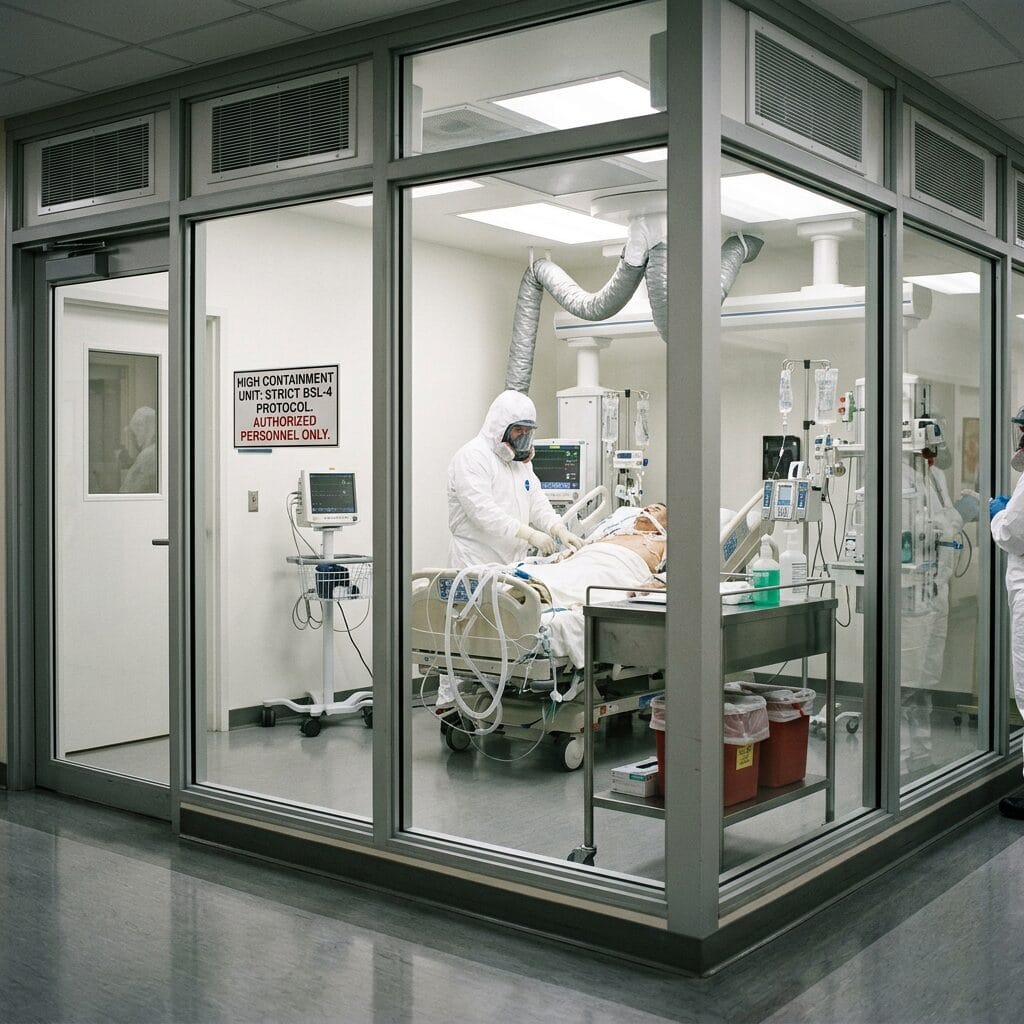
A U.S. doctor who contracted Ebola while treating patients in the Democratic Republic of Congo has been discharged from a Berlin hospital.
That is good news.
It is also a painful reminder of the inequality built into global health. In Berlin, the patient received advanced isolation care, combined antiviral therapy, and intensive supportive treatment at one of Europe’s strongest medical institutions. The virus has not been detected in him since May 30, and his symptoms reportedly subsided significantly.
That is what high-level medicine can achieve.
But in Congo, the outbreak is still killing people.
This Recovery Is a Medical Success
The discharge from Charité hospital is clearly a major treatment success.
Ebola is one of the most feared infectious diseases in the world, and survival depends heavily on early detection, careful isolation, hydration, organ support, infection control, and access to advanced medical treatment. The fact that the patient recovered enough to leave the hospital shows the power of modern emergency medicine when the right systems are in place.
This is what happens when expertise, equipment, isolation units, antiviral therapy, and monitoring all come together.
The result can be life-saving.
But One Recovery Does Not Mean the Outbreak Is Under Control
The danger is mistaking one encouraging case for a broader victory.
The Congo and Uganda outbreak remains deadly. Dozens of confirmed deaths have already been reported. Communities are still under pressure. Health workers remain exposed. Surveillance systems are strained. The Bundibugyo strain involved in the outbreak has no approved vaccine or standard treatment, making containment much harder.
So yes, one patient’s recovery matters.
But it does not erase the wider crisis.
The Contrast Is Brutal
This case exposes a hard truth.
A doctor infected in Congo can be medically evacuated to Germany, placed in a specialized isolation ward, treated with advanced therapy, and discharged after successful care. Many Congolese patients fighting the same disease do not have that pathway.
They may face weak clinics, delayed diagnosis, insecurity, shortage of supplies, poor transport, community distrust, and limited access to advanced care.
That does not mean doctors in Congo are less capable.
It means they are being forced to fight a deadly outbreak with fewer tools.
Health Workers Are Paying the Highest Price
The patient reportedly contracted Ebola while treating people in the DRC.
That matters because health workers are always at the center of Ebola risk. They are the ones closest to patients, bodily fluids, contaminated surfaces, burial practices, and the earliest moments when a case may not yet be confirmed.
Every outbreak asks health workers to step into danger.
The least the world can do is make sure they have protective equipment, training, transport, pay, testing, and treatment access if they become infected.
Heroism should not be used as a substitute for protection.
The Family Quarantine Shows the System Worked
The patient’s five family members were considered high-risk contacts and quarantined at Charité.
None showed symptoms.
That detail matters because it shows what careful containment looks like when systems are functioning properly. High-risk contacts were identified, isolated, monitored, and protected. The goal was not panic. It was discipline.
That is how Ebola is contained.
Not through fear alone, but through methodical public health work: isolate, monitor, test, protect, repeat.
Ebola Does Not Spread Like COVID — but It Is Still Deadly
Public communication has to be clear.
Ebola is not an airborne respiratory virus spreading casually through crowds. It spreads mainly through direct contact with bodily fluids of infected people or contaminated materials. That means the general public risk in countries far from the outbreak remains low when proper containment is in place.
But low public risk does not mean low danger.
For patients, caregivers, health workers, and outbreak communities, Ebola remains terrifying. The disease can kill quickly, and fear can spread even faster than the virus when officials communicate poorly.
The Real Fight Is Still in Congo
The Berlin case is important because it shows what treatment can do.
But the central battlefield remains Congo and the surrounding affected region. That is where the outbreak must be stopped. That is where testing must expand. That is where health workers need protection. That is where communities need trust. That is where treatment centers need supplies.
Evacuating individual patients can save lives.
It cannot replace outbreak control at the source.
Global Health Is Only as Strong as Its Weakest Front Line
This case should force a bigger question.
Why should survival depend so heavily on whether a patient can reach Berlin?
If the world can mobilize advanced care for one evacuated patient, it should also be able to mobilize stronger support for the communities where the outbreak is spreading. That means funding, logistics, mobile labs, protective equipment, trained local teams, contact tracing, safe burials, and reliable treatment capacity.
Outbreak response cannot be built around rescuing the fortunate few.
It has to protect the many.
The Meaning of the Moment
The U.S. doctor’s discharge is a hopeful story.
But it is also a warning.
It shows that Ebola can be survived with fast, advanced, well-coordinated care. It also shows how unequal access to that care remains. In Germany, the virus was contained in a high-resource hospital. In Congo, the outbreak is still testing fragile systems under brutal conditions.
The lesson is simple.
Modern medicine can save lives.
But only if the people who need it can actually reach it.

