


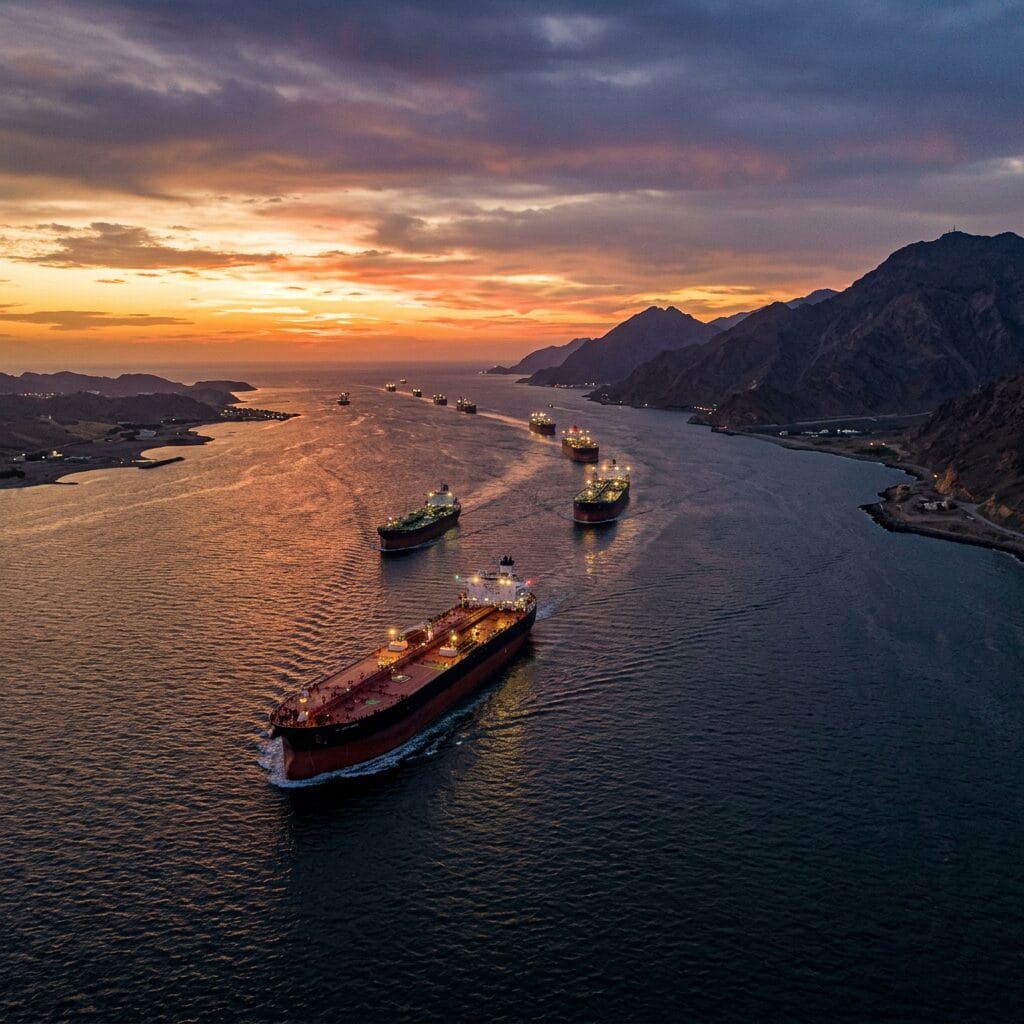
The Strait of Hormuz may finally have a path toward reopening.
That alone is major news.
Iranian state TV says it has obtained a draft framework for a possible U.S.-Iran memorandum of understanding that would restore commercial shipping through the strait to pre-war levels within a month. In return, the United States would lift its naval blockade and pull military forces back from Iran’s vicinity.
If this becomes real, it could be one of the most important diplomatic breakthroughs since the war began.
But the details matter.
And the details show this is not simply a peace plan. It is a struggle over who controls one of the world’s most important economic arteries.
Hormuz Is the Prize
The Strait of Hormuz is not just a stretch of water.
It is leverage, energy, inflation, shipping, military pressure, and global anxiety squeezed into one narrow passage. When Hormuz slows down, the world feels it. Oil prices move. Insurance costs rise. shipping routes become unstable. Governments start worrying about fuel, food, inflation, and public anger.
That is why any draft deal over Hormuz matters so much.
This is not only about Iran and the United States. It is about whether the global economy can breathe again.
The Deal Would Trade Pressure for Passage
The basic shape of the framework is clear enough.
Iran would restore commercial shipping through the strait to pre-war levels within a month. The United States would lift its naval blockade and withdraw military forces from near Iran. Military vessels would reportedly be excluded from the arrangement, and Iran would manage shipping traffic through the strait in cooperation with Oman.
That is not a small concession by either side.
Washington would be easing the military pressure that helped force the talks. Tehran would be restoring commercial movement through the waterway it has used as leverage. Both sides would be giving up something, but neither side would be doing so out of trust.
That is why the agreement remains fragile before it even exists.
Iran Wants Verification Before Movement
Iran’s reported position is telling: no steps without tangible verification.
That phrase matters.
Tehran clearly does not want to reopen shipping or make visible concessions based only on American promises. It wants proof that the blockade is ending, that military pressure is easing, and that Washington is not simply using negotiations to extract concessions before returning to force.
That is understandable from Iran’s point of view.
But it also creates a sequencing problem.
Who moves first? Who verifies? Who guarantees compliance? Who decides whether the other side has done enough?
These are the kinds of technical questions that can wreck even promising diplomacy.
Washington Will Not Want Iran to “Own” the Strait
The biggest dispute may be hidden inside one word: manage.
If Iran manages ship traffic through Hormuz with Oman, Tehran may present that as recognition of its role in controlling the passage. The United States and its allies will likely resist any arrangement that looks like Iran has been rewarded with formal authority over a global shipping chokepoint.
That is the political danger.
Commercial shipping may reopen, but the symbolism of who controls the route could remain explosive.
The world needs Hormuz open. Iran wants its leverage recognized. Washington wants open navigation without appearing to legitimize Iranian control. Those goals overlap, but they are not the same.
Oman’s Role Is Crucial
Oman’s involvement makes diplomatic sense.
Muscat has often played the role of quiet regional mediator, trusted enough by different sides to help manage difficult channels. In this framework, Oman could serve as a practical bridge between Iranian control claims and international demands for safe passage.
That may be the only way to make the deal workable.
A purely Iranian-managed system would alarm Washington and other powers. A purely U.S.-dictated system would be unacceptable to Tehran. Oman gives both sides a softer landing.
A U.N. Resolution Would Give the Deal More Weight
The reported draft also suggests that if a final agreement is reached within 60 days, it could become a binding U.N. Security Council resolution.
That would matter.
A U.N. framework would give the deal more legitimacy, more international oversight, and more pressure on both sides to comply. It could also help reassure shipping firms, insurers, and energy markets that the reopening is not merely a temporary political gesture.
But even a U.N. resolution cannot create trust by itself.
It can formalize an agreement. It cannot guarantee that the military and political logic behind the conflict has disappeared.
The War Created the Crisis. Shipping Is Now the Exit Ramp.
The war began with a sharp escalation between Iran and Israel, followed by missile and drone exchanges, Gulf shipping disruption, and U.S. military involvement.
That sequence turned a regional conflict into a global economic problem.
Now shipping may become the first serious pathway out of the crisis. That is not surprising. In modern conflict, trade routes often become both weapons and bargaining chips. Once the economic damage becomes severe enough, reopening commerce can become the most urgent diplomatic objective.
In plain terms, the world may not get peace first.
It may get shipping first.
This Could Calm Oil Markets, but Not Immediately
If the deal becomes real and Hormuz traffic returns to pre-war levels within a month, energy markets could breathe easier.
But confidence will not return overnight.
Shipowners will want proof the route is safe. Insurers will want evidence that the risk has fallen. Governments will want guarantees that the agreement will hold. Energy buyers will want to see actual tankers moving normally, not just statements from capitals.
Markets trust movement more than words.
The first test of this deal will not be a press conference.
It will be the number of ships safely passing through the strait.
The Risk Is a Deal That Looks Like Victory to Both Sides
For this framework to survive, both Washington and Tehran need to sell it domestically.
Trump will need to present the deal as proof that pressure worked and Iran was forced to reopen the strait. Iran will need to present it as proof that resistance forced the U.S. to lift the blockade and back away militarily.
That is possible.
But it is also risky.
If either side feels the other is claiming too much victory, the politics around the deal could harden quickly. Diplomacy works best when both sides can save face. It collapses when one side decides the other is using the agreement to stage a humiliation.
The Real Question Is What Comes After Reopening
Reopening Hormuz would be a breakthrough.
But it would not solve everything.
The nuclear issue would still remain. Israel’s security concerns would still remain. U.S.-Iran distrust would still remain. Regional proxy tensions would still remain. The question of military vessels in or near the strait would still remain. And the broader conflict that produced the blockade would still need a political settlement.
That means this draft framework may be less a final peace deal than a ceasefire for the global economy.
Still, that would matter.
A ceasefire for the global economy is better than continued paralysis.
The Meaning of the Moment
The draft Hormuz framework is important because it shows both sides understand the crisis cannot continue forever.
Iran has used the strait as leverage. The United States has used the blockade as pressure. The world economy has paid the price. Now diplomacy appears to be circling the obvious truth: Hormuz must reopen, and neither side can afford to look like it simply surrendered.
That is why the framework is hopeful.
It is also why it is fragile.
If finalized, it could begin restoring commercial shipping and easing global energy pressure. If it collapses, the world may return to blockade, retaliation, tanker fear, and another inflation shock.
The strait is not just a waterway anymore.
It is the test of whether this war can still be contained.