

Seoul just experienced the kind of cultural moment that feels bigger than music.
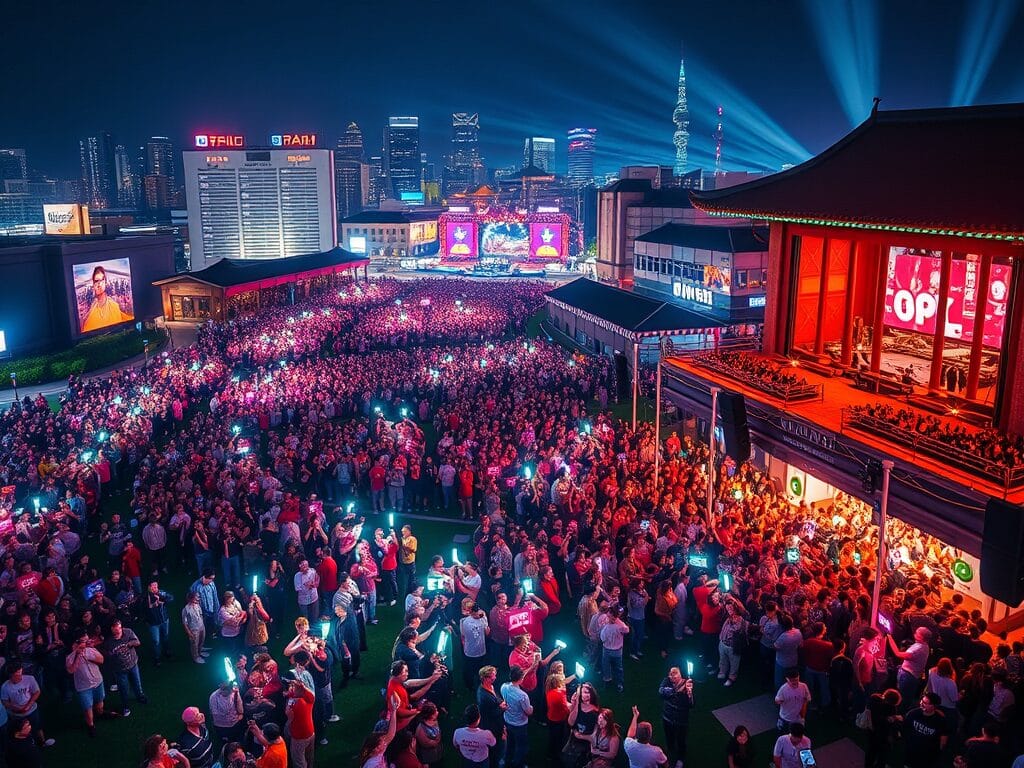
BTS returned to the stage as a full group for the first time in years, and the city responded by effectively locking down central Seoul for their comeback show. Streets around Gwanghwamun Square were closed, security lines went up, and the entire area was treated like a high-capacity venue—because that’s exactly what it became: a mass, global-scale event happening in the middle of a capital city.
This wasn’t a normal concert. It was a national-scale reunion.
A comeback measured in crowds — and in planning
The show was free, tied to BTS’s return-era album release, and it drew an estimated 260,000 fans into the city center. At the same time, it wasn’t only a Seoul event. It was streamed live worldwide on Netflix, reaching audiences in around 190 countries.
That combination—free public square + global livestream—creates a rare dynamic: the energy of a street-level crowd, multiplied by a planet-sized audience.
But it also creates a serious public safety problem. Seoul authorities treated it as such.
Why the city went into “full security mode”
South Korea has painful recent memory of crowd disasters, and officials weren’t taking chances.
To keep the event from turning dangerous, the city deployed extensive measures:
- Major street closures around the square
- Metal detectors and controlled entry points
- Drone countermeasures, including signal jammers to prevent unauthorized drones
- A huge staffing footprint—thousands of personnel for crowd management and emergency response
The message was clear: if BTS are going to reclaim the city center, the city will run it like a stadium—with every risk planned for.
More than a show: the ignition point for a massive global tour
This concert wasn’t the finish line—it was the starting gun.
BTS are launching a world tour spanning 34 regions and 82 shows through 2027, with projections that it could become one of the biggest and most lucrative tours in modern pop history. Industry estimates suggest:
- total earnings could reach about 2.7 trillion won (roughly $1.8 billion)
- expected total attendance could exceed 6 million fans
- ticket revenue alone could approach 1.5 trillion won
- and merchandise (especially signature items like the ARMY Bomb light stick) could add a major extra stream
In other words, the comeback isn’t only emotional—it’s economic. It’s a global machine rebooting.
The real takeaway: BTS as infrastructure, not just a band
When a group can trigger city-level security operations, global livestream distribution, and multi-year tour economics—BTS stops functioning like “artists” in the usual sense.
They become infrastructure:
- for tourism
- for cultural branding
- for the entertainment economy
- for national soft power
- and for the global fan networks that move faster than any traditional marketing campaign
This is what “supergroup” means in 2026: the return doesn’t simply happen. It has to be managed.
Bottom line
BTS didn’t just perform again. They returned in a way that forced Seoul to reorganize itself—streets, security, logistics, the entire public square—around the reality of what their presence generates.