


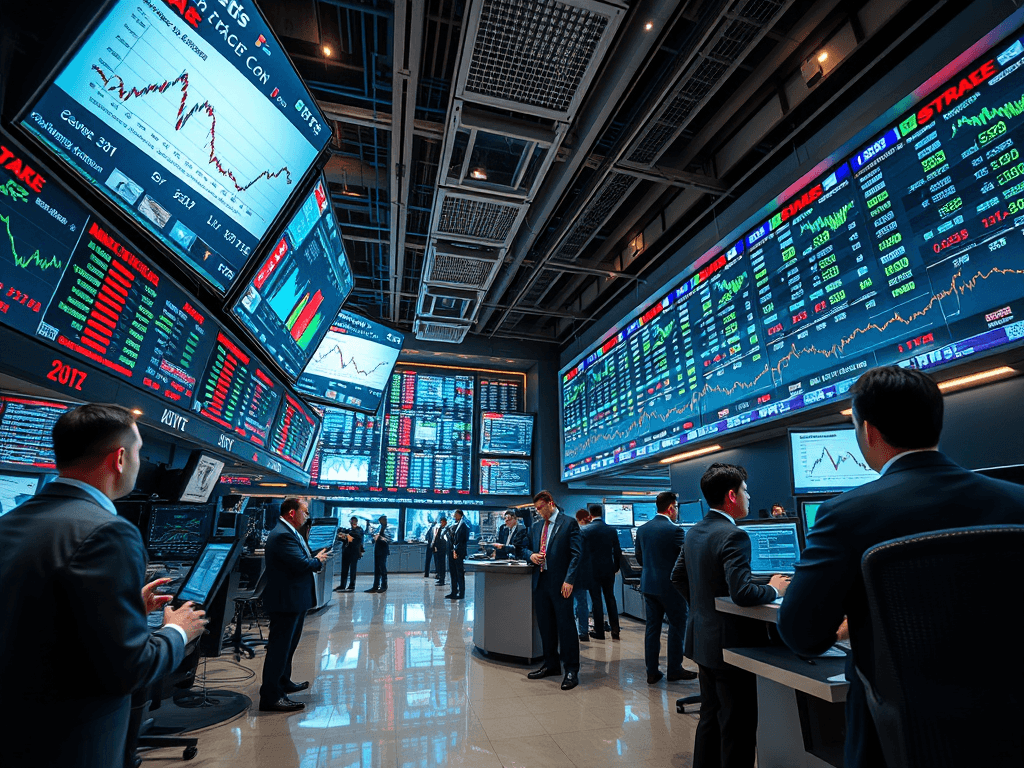
Global markets moved in that familiar early-2026 pattern: equities trying to stay buoyant, currencies reacting to rate expectations, and commodities pulling attention whenever geopolitics or policy headlines shift. It’s not a clean “risk-on” or “risk-off” day—more like a market with one eye on opportunity and the other on the exit sign.
Stocks: gains exist, conviction is thinner
Equity trading has been defined by a strange mix:
- big indexes hovering near highs in some regions
- a rotating leadership (tech one day, defensives the next)
- and a growing sense that valuations are “priced for good news”
That makes rallies feel more fragile. When investors believe the upside is capped but the downside can gap on a headline, they tend to chase selectively rather than buy broadly.
Rates: the real steering wheel
Markets are still trading around one core question: how quickly central banks can cut without reigniting inflation.
Even small moves in bond yields have been translating into outsized moves in equities—especially in growth and tech—because the market is re-pricing the future cash-flow story almost daily. This is why “soft data” prints and central-bank commentary keep hitting like big events: the rate path is the denominator under everything.
FX: the dollar’s mood is everybody’s problem
Currency markets continue to reflect relative rate expectations:
- if U.S. cuts look closer, the dollar tends to soften
- if inflation or jobs data pushes cuts out, the dollar firms
That matters globally because a stronger dollar tightens conditions for emerging markets, pressures commodity-importing countries, and can amplify risk-off moves. A weaker dollar does the opposite—eases financial conditions and often boosts dollar-priced commodities.
Commodities: the hedge layer stays active
Commodities remain the “headline hedge” bucket:
- oil trades the balance between supply fundamentals and geopolitical risk
- metals react to safe-haven demand and rate expectations
- and any hint of trade disruption can quickly reprice industrial inputs
This keeps commodity-linked equities sensitive to narratives rather than just quarterly earnings.
The broader vibe: late-cycle psychology without a clear recession signal
A lot of traders are acting like this is a late-cycle market:
- crowded positioning in a few themes
- higher sensitivity to surprises
- quick profit-taking on rallies
- and sharp air pockets when buyers step away
But at the same time, the data isn’t offering a single dominant story that forces everyone into recession positioning. So the result is a market that oscillates: buy the dips, but don’t fall in love.
What to watch next
In the near term, three catalysts tend to decide whether this turns into a calm grind higher or a sharper risk reset:
- key inflation prints and wage signals
- central-bank guidance (especially on the timing of cuts)
- geopolitics and trade policy headlines that can hit supply chains fast
Bottom line
Today’s global-market tone is less about one big move and more about a familiar balancing act: investors still want upside, but they’re increasingly aware that the real risks now come from rates, policy shocks, and geopolitics—not from obvious earnings collapse. In that environment, markets can keep levitating… until one headline makes everyone remember why hedges exist.