


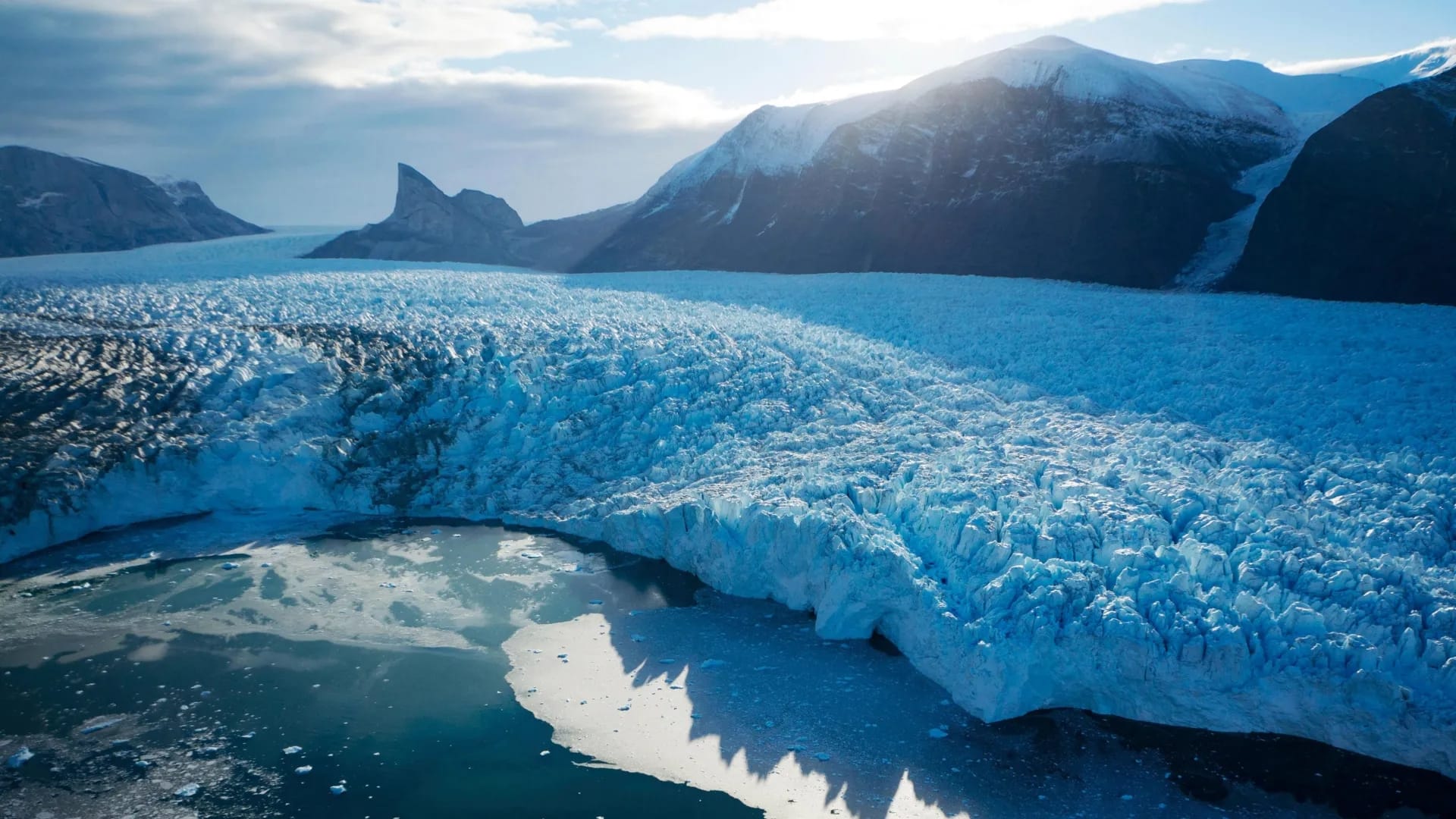
When people picture Greenland melting, they imagine warm air, warmer oceans, and darkened ice soaking up sunlight. But new research is spotlighting a quieter driver that doesn’t show up on satellite images: “hidden heat” beneath Greenland—energy coming from below the ice that can influence how the ice sheet moves, not just how it melts.
This matters because Greenland isn’t a static block of frozen water. It’s a living system: ice flows, cracks, accelerates, slows, and sometimes surges. And what happens at the base of the ice—where it meets bedrock—can be just as important as what happens at the surface.
Where the hidden heat comes from
Under an ice sheet, heat can come from:
- Geothermal energy rising from Earth’s interior
- Frictional heating as ice slides over rock
- Hotter-than-expected rock zones caused by local geology
You don’t need volcano-level heat for it to matter. Even modest extra warmth can create thin films of meltwater at the base, and that meltwater is a game-changer.
Why basal warmth changes ice behavior
Meltwater under the ice acts like a lubricant. More lubrication can mean:
- faster sliding of ice toward the coast
- more active ice streams (the “highways” that drain ice rapidly)
- shifts in where ice is locked to bedrock vs. where it slips
In other words, “hidden heat” can influence ice dynamics—the speed and pathways of ice flow—sometimes without producing dramatic surface melt signals.
Why this complicates sea-level projections
Sea-level models depend on understanding not just how much ice melts, but how quickly ice moves into the ocean. If models underestimate heat from below, they may misjudge:
- how much basal melting is happening
- how meltwater routes under the ice (and where it concentrates)
- how sensitive certain regions are to sudden acceleration
The result isn’t necessarily “everything is worse than we thought.” It’s more precise than that: some areas may be more vulnerable, and timing may change—which is exactly what sea-level planners care about.
The takeaway
Greenland’s future isn’t written only in the sky and the sea. It’s also written in the rock beneath it. And as researchers map and quantify this “hidden heat,” we get a clearer picture of a key truth: an ice sheet doesn’t have to melt dramatically to become dramatically mobile.