



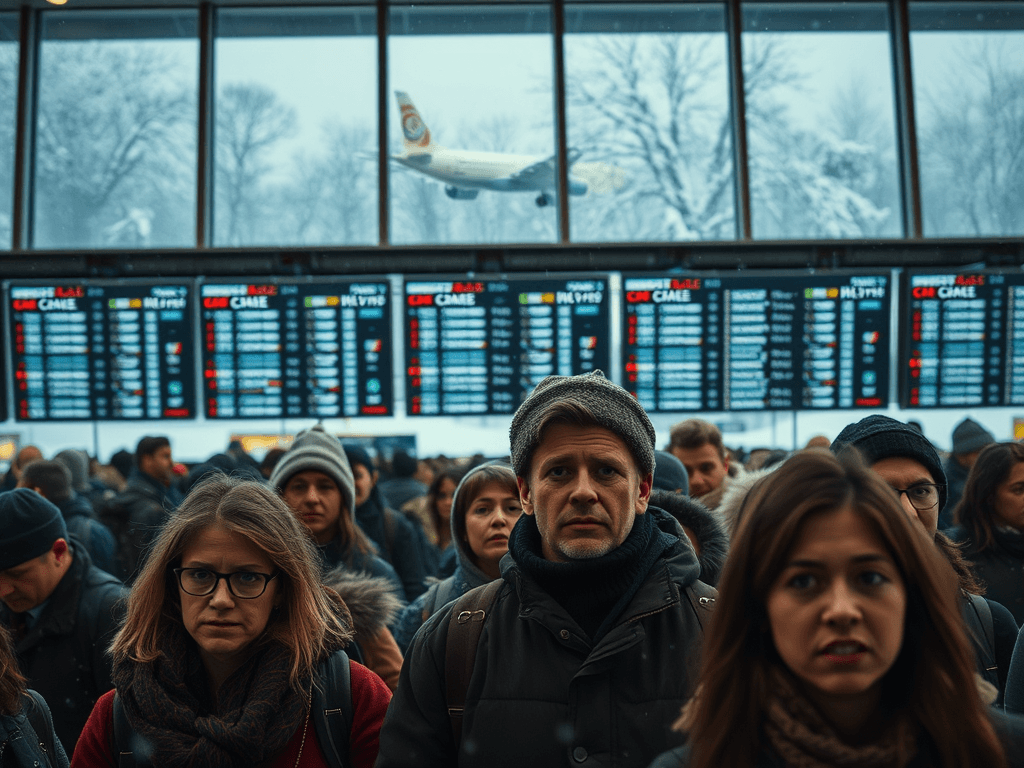
Holiday travel got slammed as winter storm warnings spread across parts of the U.S., with over 1,000 flights canceled and thousands more delayed—the classic seasonal combo of packed airports, tight connections, and weather that doesn’t care about your itinerary.
This kind of disruption snowballs fast. One storm doesn’t just ground planes in one region; it throws off the entire network. Crews time out. Aircraft end up in the wrong cities. Gates fill up. A late inbound flight becomes your canceled outbound flight, and suddenly a “two-hour delay” turns into “see you tomorrow.”
For travelers, the best move is usually the unglamorous one: assume things will get worse before they get better. Check your airline app constantly, avoid checking bags if you can, and have a Plan B route in mind (even if it’s a train, rental car, or one extra night). Airports during storms aren’t just transportation hubs—they’re stress multipliers.
The bigger takeaway is that holiday aviation runs close to full capacity on normal days. Add winter weather and there’s little slack. When the system gets hit, it doesn’t bend gracefully—it breaks in small, frustrating ways, one canceled flight at a time.


