



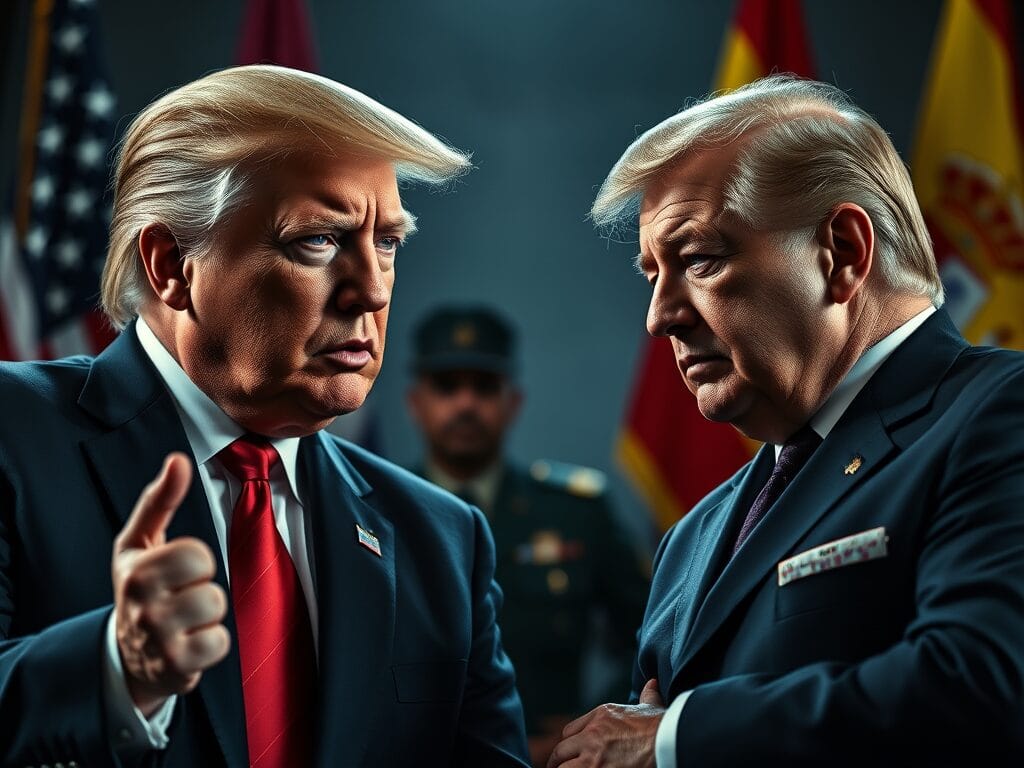
A new transatlantic dispute is blowing up in public: the White House says Spain has agreed to cooperate with the U.S. military after President Donald Trump threatened to cut off trade — but Madrid is flatly denying any deal exists.
The clash matters because it sits at the intersection of Iran war politics, NATO burden-sharing fights, and U.S.–EU trade leverage — and because it raises a basic question allies rarely ask out loud: who’s telling the truth about what was agreed behind closed doors?
What the White House says happened
At a press briefing on March 4, White House press secretary Karoline Leavitt told reporters that Spain had “heard the president’s message loud and clear” and that it was her understanding Spain had agreed to cooperate with the U.S. military. She did not provide details about what cooperation would look like.
What Spain says happened
Spain’s foreign minister José Manuel Albares immediately rejected the claim, saying he “categorically” denies any agreement and insisting Spain’s position on the war and on the use of Spanish bases has “not changed at all.”
Spain’s deputy prime minister María Jesús Montero reinforced the political tone by saying Spain “will not be vassals” to another country, while Prime Minister Pedro Sánchez reiterated Spain’s anti-war stance and warned the conflict could trigger a wider global disaster.
How this started: bases, Iran, and a trade threat
The dispute traces back to Spain’s refusal to allow the U.S. to use jointly operated naval and air bases in southern Spain for missions linked to strikes on Iran — specifically bases associated with Rota and Morón.
Trump responded by threatening a sweeping penalty: he said the U.S. could cut off all trade with Spain, framing it as retaliation for Spain’s stance and also looping in his criticism of Spain’s defense spending relative to U.S. demands for NATO allies to spend 5% of GDP.
Reuters also reported that the U.S. relocated 15 aircraft, including refueling tankers, from the Rota and Morón bases after Spain’s government said it would not allow them to be used in attacks on Iran.
The EU complication: you can’t single out Spain
During a meeting with Trump, German Chancellor Friedrich Merz publicly emphasized that Spain can’t be carved out for separate punishment because trade negotiations happen EU-to-U.S., not country-by-country.
That’s the legal and diplomatic trap here: even if Washington wants to pressure Madrid, it risks turning a Spain dispute into an EU dispute, especially if the U.S. tries to use trade tools in ways Europe views as unilateral or unlawful.
What to watch next
- Clarification from Washington on what “cooperate” means (base access? logistics? intelligence coordination?)
- Spain’s March posture: whether Madrid holds firm or offers limited concessions that don’t look like a full reversal
- EU response if U.S. trade threats continue — especially if Brussels sees an attempt to split the bloc
Bottom line: this is less a single disagreement than a stress test of alliance politics in wartime — and it’s happening in real time, on the record, with both sides publicly contradicting each other.


