


At first, wars arrive as headlines.
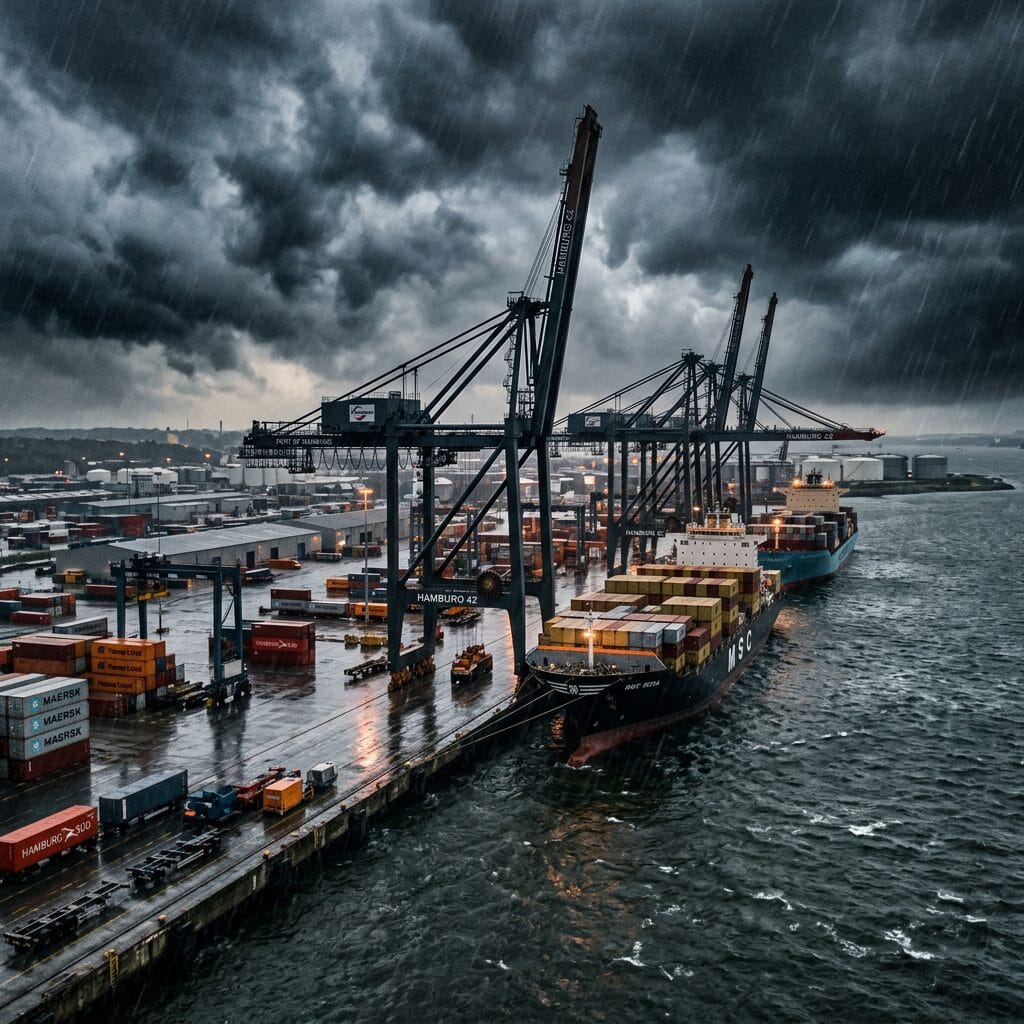
Then they arrive as fuel costs, delayed shipments, weaker orders, nervous consumers, tighter margins, and executives quietly lowering expectations. That is the phase the world economy is entering now. The Iran war is no longer something markets can treat as a contained geopolitical disturbance. It is seeping into production lines, service sectors, supply chains, and business planning across continents.
This is what modern economic contagion looks like.
The Shock Has Moved Beyond Oil
The first instinct in any Middle East conflict is to watch energy prices. That still matters. But the deeper danger begins when the shock spreads beyond crude itself and starts rearranging how businesses think, buy, stock, ship, and price.
That is where things get harder.
Once manufacturers start worrying about inputs, once service industries start feeling the pressure, and once firms begin making defensive decisions out of fear rather than confidence, the conflict stops being an energy story alone. It becomes a growth story. And usually not a good one.
Europe Looks Especially Exposed
Some parts of the world are better positioned than others to absorb this kind of stress. Europe does not look like one of them.
The region was already carrying enough weight: weak growth, policy fatigue, industrial strain, and a constant sensitivity to imported shocks. So when another major energy and shipping disruption lands on top of that, it does not just hurt. It compounds.
That is the real problem with repeated crises. They do not arrive on fresh ground. They arrive where balance is already fragile.
Business Is Starting to React the Way It Always Reacts to Fear
One of the clearest warning signs in moments like this is not just declining confidence. It is distorted behavior.
Companies rush orders. They pull activity forward. They build inventory sooner than planned. They try to get ahead of shortages and delays before conditions worsen. For a brief moment, that can even make parts of the economy look stronger than they really are. Output rises, orders move, factories stay busy.
But that kind of burst is often not strength. It is anxiety with a production schedule.
And when fear-driven front-loading fades, the hangover can be ugly.
Inflation Never Really Left. War Just Gave It New Fuel.
A lot of policymakers wanted to believe the worst inflationary period was finally behind them. War has a habit of destroying that comfort.
Higher energy costs do not remain neatly contained. They bleed into transport, packaging, raw materials, services, food systems, and household expectations. Even if the first jump is driven by fuel, the wider effect can become far more stubborn. That is when central banks get trapped again between weak growth and sticky prices.
It is one thing to fight inflation in a cooling economy. It is much harder when geopolitics keeps reheating it.
Corporate Caution Is Starting to Tell the Truth
Public companies usually try not to panic out loud. They soften language, talk about uncertainty, and promise agility. But when enough firms start cutting expectations, warning about costs, or preparing customers for higher prices, the broader picture becomes hard to ignore.
That is often when the cleanest truth emerges.
Not from politicians. Not from market strategists. From companies looking at actual shipping conditions, actual invoices, actual customer behavior, and actual margins under pressure. They are often the first to admit that a geopolitical shock is no longer theoretical.
Some Sectors Will Keep Winning. That Does Not Mean the World Is Fine.
Every crisis has its outliers.
Technology tied to the AI boom may keep surging. Trading firms may thrive on volatility. Some exporters may benefit from narrow advantages. But these bright spots should not be confused with general health. A few sectors doing well inside a stressed global system does not cancel the broader damage. It just shows that modern economies can look strong in fragments while weakening underneath.
That makes the current moment especially deceptive.
A world can still produce winners while the wider structure grows more brittle.
The Real Risk Is Duration
Short shocks can be absorbed. Long disruptions change behavior.
That is the line the global economy is now approaching. The longer shipping remains constrained, the longer energy uncertainty lasts, and the longer businesses are forced to make defensive choices, the more likely it is that this stops being a temporary war effect and becomes a lasting economic drag.
That is when confidence breaks in a deeper way.
Investment gets postponed. Hiring cools. Consumers turn cautious. Governments lose room to maneuver. And what began as a regional war starts leaving permanent fingerprints on global growth.
The World Economy Is Learning the Same Old Lesson Again
For all the talk of resilience, diversification, and modern financial sophistication, the global economy remains deeply vulnerable to physical chokepoints, energy disruption, and geopolitical escalation.
That truth keeps returning because it never really went away.
The Iran war is simply forcing the world to face it again: production depends on stability, prices depend on open routes, and growth depends on more fragile foundations than leaders like to admit. Once those foundations shake, even economies far from the battlefield start feeling the tremors.
And this time, the tremors are spreading.