


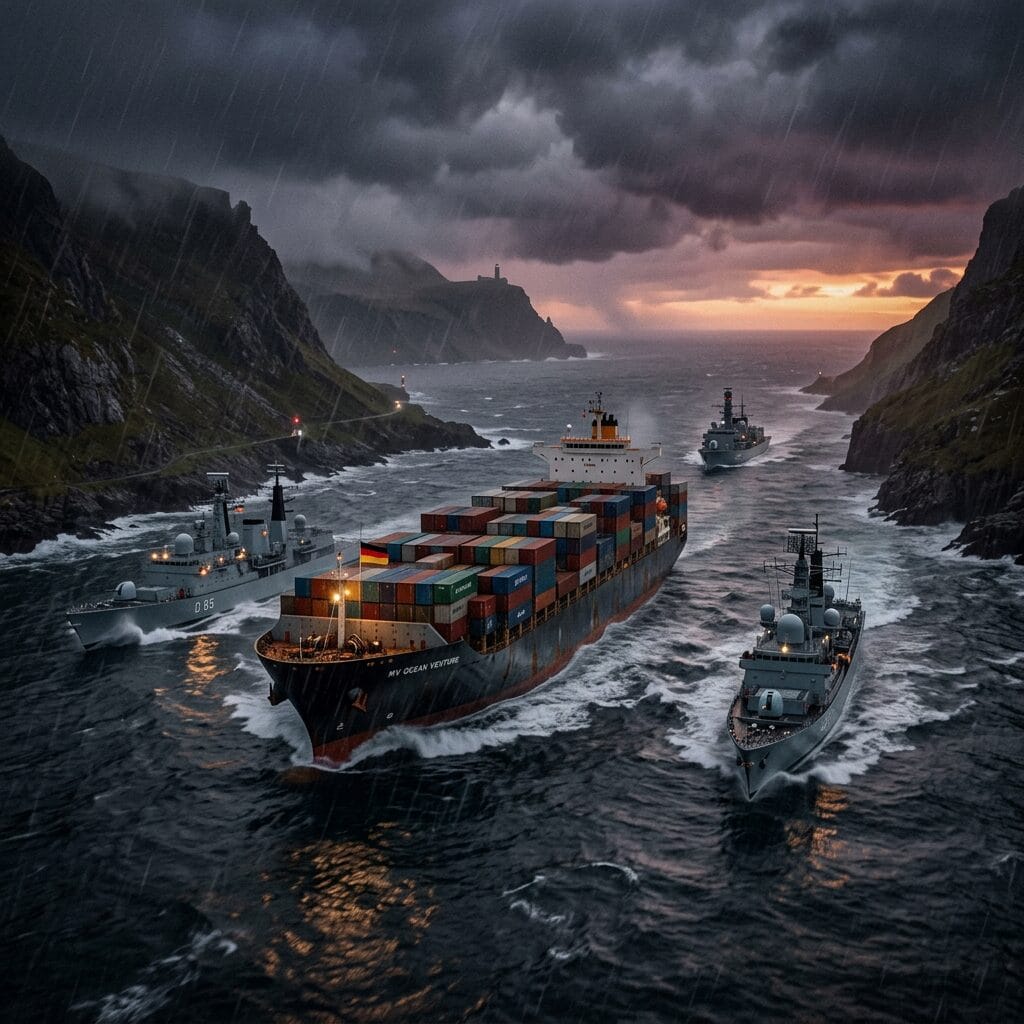
When a superpower starts forcibly seizing ships near one of the most critical waterways on Earth, the question is no longer whether the crisis is serious.
The question is how many more sparks the region can take before the whole thing blows open again.
The U.S. seizure of an Iranian-flagged cargo vessel near the Strait of Hormuz is not just another dramatic episode in an already unstable confrontation. It is a signal that this conflict is moving into a more dangerous phase, one where military pressure, maritime control, and diplomatic theater are colliding in the same narrow stretch of water.
That is not stability. That is a matchbox.
The Strait Is No Place for Power Games
Hormuz has always been more than geography.
It is leverage, vulnerability, and global economic pressure packed into a single chokepoint. When armed confrontation intensifies there, the effects travel instantly beyond the Gulf. Oil traders react. Shipping companies panic. Insurers recalculate. Governments start issuing statements filled with the word “concern,” which usually means they know the danger is real but have no immediate way to stop it.
So when the U.S. seizes a ship there, it is not a contained tactical move. It becomes a geopolitical message with global consequences.
And Iran heard that message clearly.
This Is How Ceasefires Rot From the Inside
The ugliest part of moments like this is how quickly they expose the emptiness of diplomatic language.
Everyone talks about restraint, de-escalation, and possible talks. Then one side boards a vessel, the other side calls it piracy, and suddenly the whole “peace process” starts looking like a thin sheet thrown over a live fire.
That is the deeper problem here. Even when official channels remain technically open, actions like this poison the atmosphere faster than diplomats can repair it. Trust was already scarce. Now it is thinner still.
A ceasefire or negotiation track cannot survive for long if every few days deliver a new humiliation, a new provocation, or a new reason for each side to claim the other is acting in bad faith.
Maritime Pressure Is Economic Warfare in Disguise
People sometimes talk about ship seizures as if they are narrow military incidents.
They are not.
They are economic warfare with uniforms on. A vessel intercepted near Hormuz is not just a vessel. It is part of a much larger contest over control, fear, and the ability to squeeze the global system without firing at every target directly. That is why these incidents hit markets so fast. The world understands, even if politicians pretend otherwise, that a threatened chokepoint is a tax on everybody.
Fuel prices rise. Freight risk rises. Panic rises.
And once panic becomes part of the equation, the crisis stops being regional.
Washington Is Showing Force, but Also Raising the Stakes
The United States may see this as a show of enforcement and dominance. Maybe it is.
But dominance has a cost when used in a corridor this sensitive. Every act of visible pressure creates a new incentive for retaliation, symbolic or otherwise. Iran does not need to win a full military contest to make the region more dangerous. It only needs to keep proving that escalation can spread, costs can rise, and diplomacy can be poisoned faster than Washington can stabilize the optics.
That is why these actions are so risky. They may project strength in the short term while making the broader crisis harder to contain in the long term.
Iran Will Read This as More Than an Interception
No state under pressure reads a move like this in narrow legal terms.
Tehran will not see only a ship seizure. It will see insult, coercion, and a test of whether it can be pushed around at one of the most symbolically charged points in the region. That matters because once humiliation becomes part of the political equation, rational de-escalation gets harder. Leaders start calculating not only in military terms, but in prestige, deterrence, and domestic image.
That is how conflicts become less manageable.
Not simply because one side strikes, but because both sides begin acting as though backing down would look worse than making the crisis bigger.
The Talks Were Fragile Already
The uncertainty around possible new talks makes this even worse.
Diplomacy in this conflict was already stumbling forward on weak legs. Now it looks even more doubtful. If one side says negotiations are still possible while the other sees ship seizures, threats, and mixed signals, then the gap between public diplomacy and actual trust becomes absurdly wide.
At some point, talks stop looking like a road to peace and start looking like set decoration for confrontation already in motion.
That seems to be where this is heading.
The World Is Still Hostage to One Narrow Waterway
That may be the harshest truth beneath all of this.
For all the speeches about resilience, diversification, and global stability, the world economy remains deeply exposed to what happens in one narrow strait. That is an astonishing level of vulnerability, and every new incident there reminds the world how fragile the whole system still is.
The ship seizure is not just a headline. It is another warning that the artery remains under pressure, the peace remains shaky, and the people running the crisis are still playing with something that can punish far more than their immediate enemies.
The Meaning of the Moment
This is not a side incident. It is a stress test.
A test of whether diplomacy has any real weight left. A test of whether military signaling can stop before it becomes full-scale breakdown. A test of whether the world can keep pretending that partial shipping, armed warnings, and rising oil anxiety somehow count as manageable normal.
They do not.
When vessels are being seized near Hormuz and talks are already wobbling, the message is simple: the crisis is not cooling. It is hardening.
And when a crisis hardens around the world’s most vital energy corridor, everybody ends up living inside its consequences.