


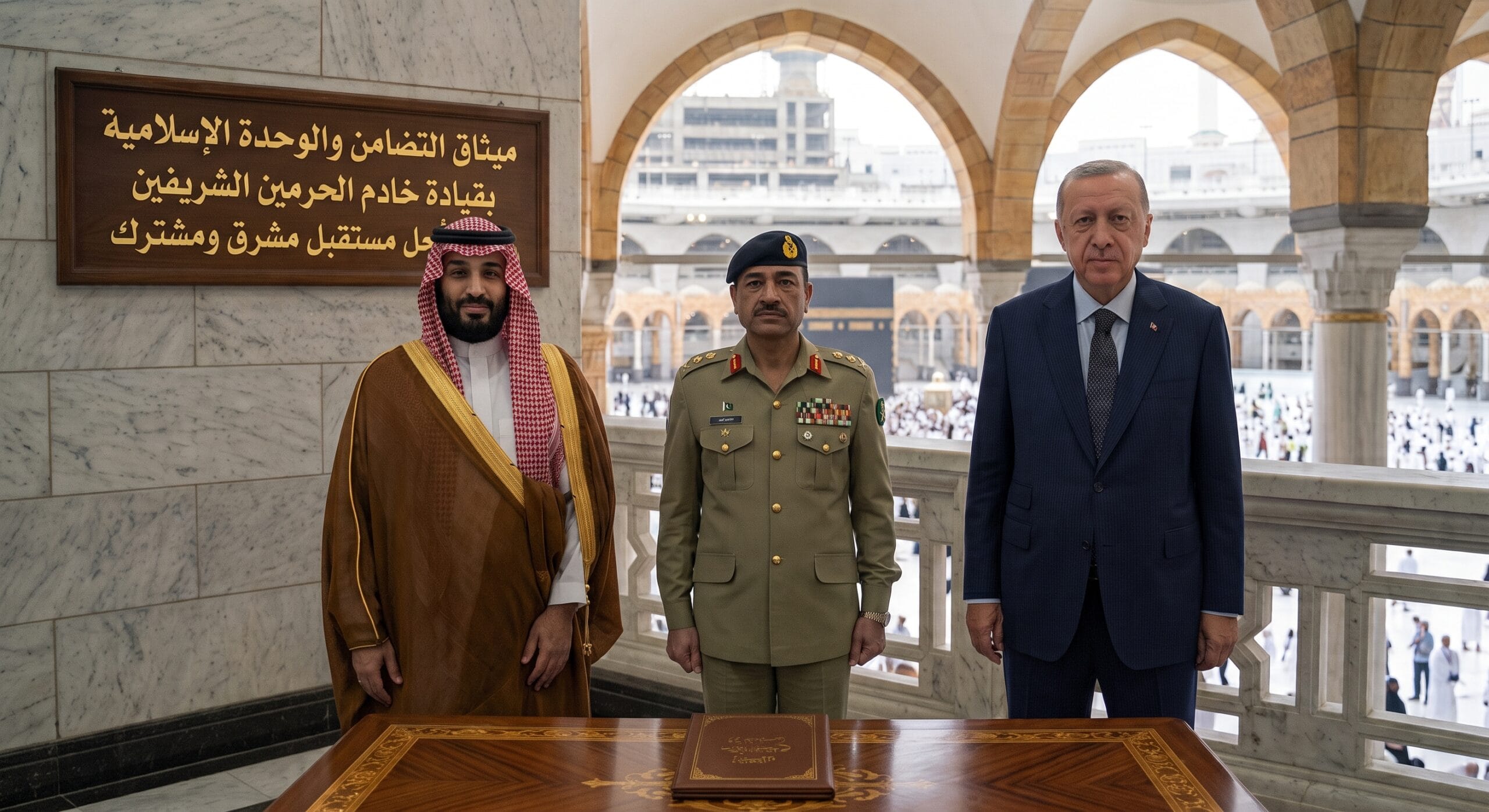
The Illusion of High-Level Defense Pacts
On August 7, 2026, Saudi Arabia, Turkey, and Pakistan signed the Mecca Joint Defense Agreement in Islam’s holiest city amid escalating regional tensions. The treaty establishes a straightforward principle: an attack on one signatory is considered an attack on all three.
At first glance, the agreement appears transformative. Saudi Arabia contributes financial power, Turkey brings an advanced defense industry, and Pakistan provides one of the region’s largest standing militaries. Together, these assets suggest a significant shift in the Middle Eastern balance of power.
In reality, however, the agreement is more symbolic than strategic. It functions primarily as a mechanism for state-level deterrence and diplomatic hedging rather than a genuine path to regional stability. By preparing for conventional warfare while overlooking the asymmetric conflicts that actually drive instability in the Middle East, the pact constructs an impressive security framework on an unstable foundation.
1. Why the Pact Fails to Protect Saudi Arabia
The agreement’s central weakness is that it is designed for a twentieth-century model of warfare—conflicts between nation states—while today’s Middle East is dominated by asymmetric warfare, proxy forces, and low-cost attacks.
The Fiscal Trap: Saudi Arabia’s Economic Vulnerability
Saudi Arabia brings immense financial resources to the alliance, but wealth alone cannot guarantee security if the country’s economic foundation remains vulnerable.
Crown Prince Mohammed bin Salman’s Vision 2030 depends on hundreds of billions of dollars in investment to finance megaprojects such as NEOM, host global events, and diversify the Kingdom beyond oil. Achieving these ambitions requires both sustained energy revenues and a stable domestic security environment.
Instead, Saudi Arabia faces persistent economic pressure from relatively inexpensive asymmetric attacks:
- The Low-Cost Drone Problem: A cheap Houthi drone costing very little can damage critical energy infrastructure, forcing Saudi Arabia to respond with interceptor missiles worth millions.
- Investor Uncertainty: Foreign investors are reluctant to commit capital to a country exposed to recurring aerial attacks. As insurance costs and political risk premiums rise, investment becomes increasingly difficult to attract.
- Resource Diversion: Rather than funding long-term economic transformation, government resources are redirected toward emergency repairs, expanded defense spending, and the ongoing maintenance of air-defense systems.
The Saudi Military’s Real Limitation
Saudi Arabia’s defense dilemma cannot be solved by hardware alone. Despite having the world’s fifth-largest defense budget, the Royal Saudi Armed Forces lack combat-proven infantry depth and remain dependent on foreign technical contractors to keep their systems operational. In past conflicts, Riyadh relied on foreign proxy infantry rather than deploying its own ground troops into sustained combat. Equipping a risk-averse, hardware-heavy military with Turkish drones does not fundamentally change its operational effectiveness against decentralized guerrilla forces.
The Asymmetry of Targets
Furthermore, Turkish drones like the Bayraktar Akıncı provide Riyadh with precision-strike capabilities that could theoretically deter conventional neighbors like the UAE in regional boundary disputes. But against the Houthis, this technology is useless. The Houthis possess no centralized oil infrastructure or state assets to target in retaliation. Meanwhile, Houthi forces have repeatedly proven capable of shooting down high-altitude drones using low-cost air defense systems. Because Saudi Arabia has everything to lose—Aramco facilities, NEOM, and foreign investment—and the Houthis have no equivalent economic infrastructure, Saudi Arabia’s true security comes from keeping Tehran and the Houthis diplomatically appeased, not from tactical airstrikes.
Settlement with Iran and the Houthis Is Essential
These vulnerabilities illustrate why the Mecca Agreement cannot resolve Saudi Arabia’s most pressing security challenge. Without a durable political settlement with both Iran and the Houthis, the Kingdom will continue to absorb the economic costs of persistent low-cost attacks.
Riyadh’s immediate priority is not preparing for a hypothetical conventional war alongside Turkey or Pakistan. Instead, it needs sustainable political arrangements that reduce the threat of proxy warfare originating from Yemen and supported by Tehran. The Mecca Agreement offers no practical mechanism for preventing these attacks without risking a broader regional conflict that would undermine Gulf economic ambitions.
2. Superpower Hedging and Performative Deterrence
If the agreement does little to address proxy warfare, why was it signed?
Its primary value is political rather than military. The pact serves as diplomatic signaling designed to strengthen each member state’s negotiating position rather than fundamentally alter the regional security environment.
Hedging Against Washington
As confidence in the U.S. security umbrella has weakened, Riyadh, Ankara, and Islamabad have sought to diversify their strategic partnerships. The agreement signals that if Washington is unwilling to provide stronger security guarantees, regional powers are prepared to explore alternative arrangements.
The “Turkey Scenario” Fallacy
The treaty’s mutual defense clause is frequently interpreted as a potential deterrent against Israel. In practice, however, the threshold for activation is far higher than many assume.
For Saudi Arabia and Pakistan to be obligated to intervene, Israel would have to launch a direct attack on sovereign Turkish territory. Such a scenario remains highly unlikely, as neither Israel nor Turkey has an interest in full-scale interstate war. If Israeli and Turkish-backed forces were to clash indirectly in Syria or elsewhere, the treaty would not necessarily compel Saudi or Pakistani military involvement.
Pakistan’s Nuclear Constraints
Pakistan’s nuclear arsenal exists primarily to deter existential threats from India. It is not intended for projecting strategic power into the Levant or the Red Sea, nor for defending Gulf energy infrastructure. As a result, Pakistan’s most significant military capability contributes little to the alliance’s practical effectiveness outside South Asia.

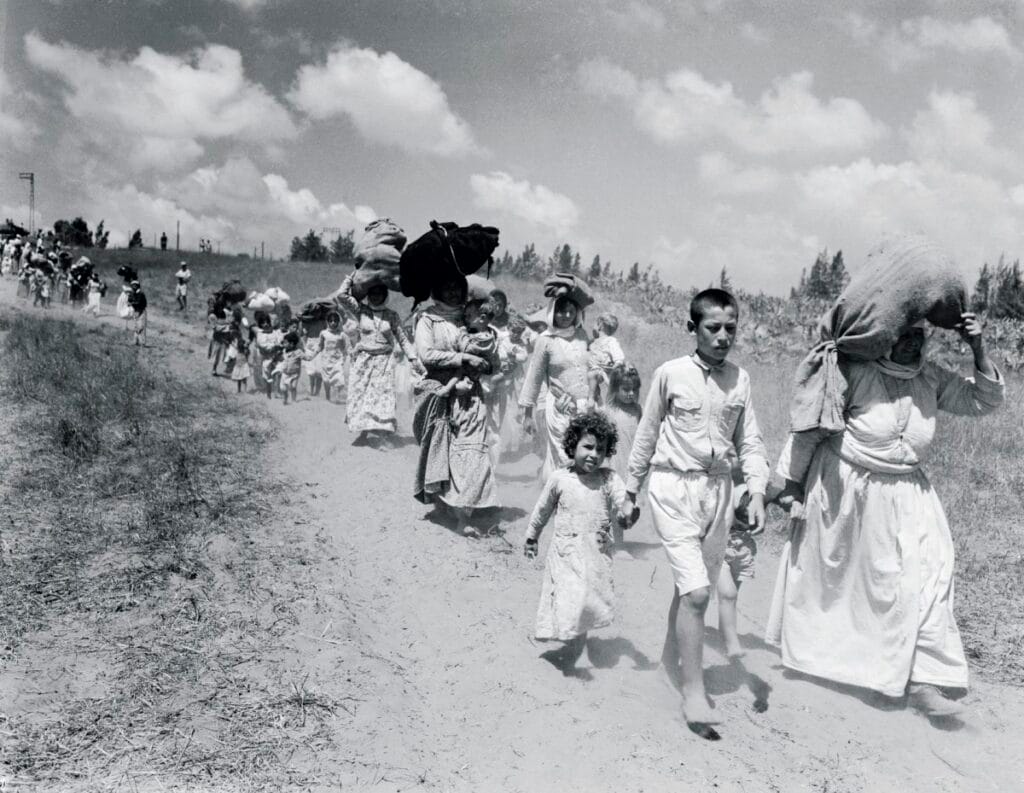
3. The Palestinian Question: The Core Driver of Regional Instability
Even if Saudi Arabia settles with Tehran and the Houthis, true regional stability remains impossible as long as the core driver of Middle Eastern conflict is ignored: the denial of Palestinian statehood.
- The Source of Proxy Legitimacy: Groups across the Levant, Iraq, and Yemen draw their recruitment momentum, political legitimacy, and public rationale directly from the ongoing occupation of Palestine.
- Public Opinion: Arab and Islamic public sentiment remains fiercely tied to the Palestinian cause. High-level treaties between governments cannot create genuine peace on the ground without a just resolution for Palestine.
- The U.S. Shield: Israel continues its military operations because of unconditional U.S. diplomatic and military backing. Pacts like the Mecca Agreement do not act as enforcement bodies for international law, leaving the primary root cause of regional escalation unchecked.
Conclusion: Building on a Sinkhole
The Mecca Joint Defense Agreement projects an image of regional unity and military strength, but its strategic value is limited.
Saudi Arabia can strengthen military partnerships, acquire advanced weapons, and deepen defense cooperation with regional powers. Yet these measures do not address the Kingdom’s most immediate vulnerabilities. Until Riyadh reaches a durable political settlement with Iran and the Houthis, its economy will remain exposed to inexpensive asymmetric attacks. Likewise, until the broader Palestinian conflict is addressed, regional security agreements will struggle to produce lasting stability.
In that sense, the Mecca Agreement resembles an attempt to build an impressive structure atop an unstable foundation. The appearance of strength may be real, but without resolving the political conditions that generate conflict, the structure itself remains inherently fragile.