


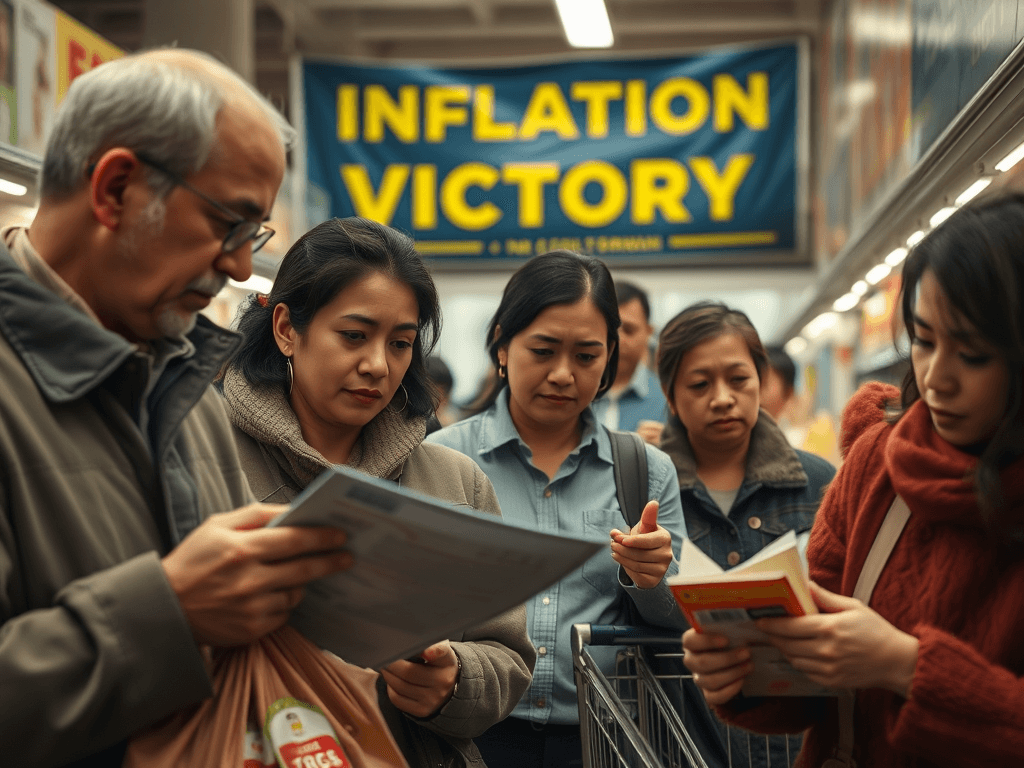
President Donald Trump has been declaring “inflation victory” in a string of economic speeches—repeating the claim nearly 20 times—framing the moment as proof that his policies have stabilized the economy. The political logic is clear: if inflation is the villain voters hate most, then “we beat it” is the simplest possible campaign message.
The problem is that many households don’t experience inflation the way politicians talk about it.
Inflation can fall while prices stay painfully high
Inflation is the rate of change in prices, not the price level itself. So even if inflation slows (or comes down from a peak), it doesn’t mean groceries, rent, insurance, or utilities get cheaper. It often means prices are still rising—just more slowly.
That’s why a leader can say “inflation is defeated” while people respond, “Then why is everything still expensive?”
The “inflation gap”: a statistics win, a lived-experience loss
This is the core disconnect:
- Official framing: Inflation is down → victory.
- Household reality: Prices are still elevated → it doesn’t feel like victory.
Many families are still adjusting their lives around higher baseline costs: smaller carts, fewer extras, more bargain-hunting, postponed big purchases. When prices don’t fall back, the feeling isn’t “we won”—it’s “we’re stuck here.”
Why Trump is leaning so hard on the message
Repeating “inflation victory” isn’t accidental—it’s an attempt to lock in a single headline for voters who don’t follow monthly data. It also shifts the conversation away from why prices rose and toward who deserves credit for “fixing” it.
But repetition doesn’t erase the basic vulnerability of the claim: if voters still feel squeezed, they won’t accept a victory lap.
What would make “victory” feel real
For most people, “inflation is over” only becomes believable when at least one of these happens:
- wages consistently outpace living costs
- rent and insurance stop climbing so aggressively
- borrowing costs ease enough to make cars/homes less punishing
- everyday essentials feel stable for long enough that stress declines
Without that, the public hears “victory” and thinks: for who?
Bottom line
Trump’s “inflation victory” messaging is designed for maximum political punch—simple, repeatable, and emotionally satisfying. But inflation is a technical term, and voters live in price levels, not price-change charts.
If the cost of living still feels like a chokehold, the country won’t care how many times anyone declares the war over. The only “win” that sticks is the one people can feel in their weekly budget.