


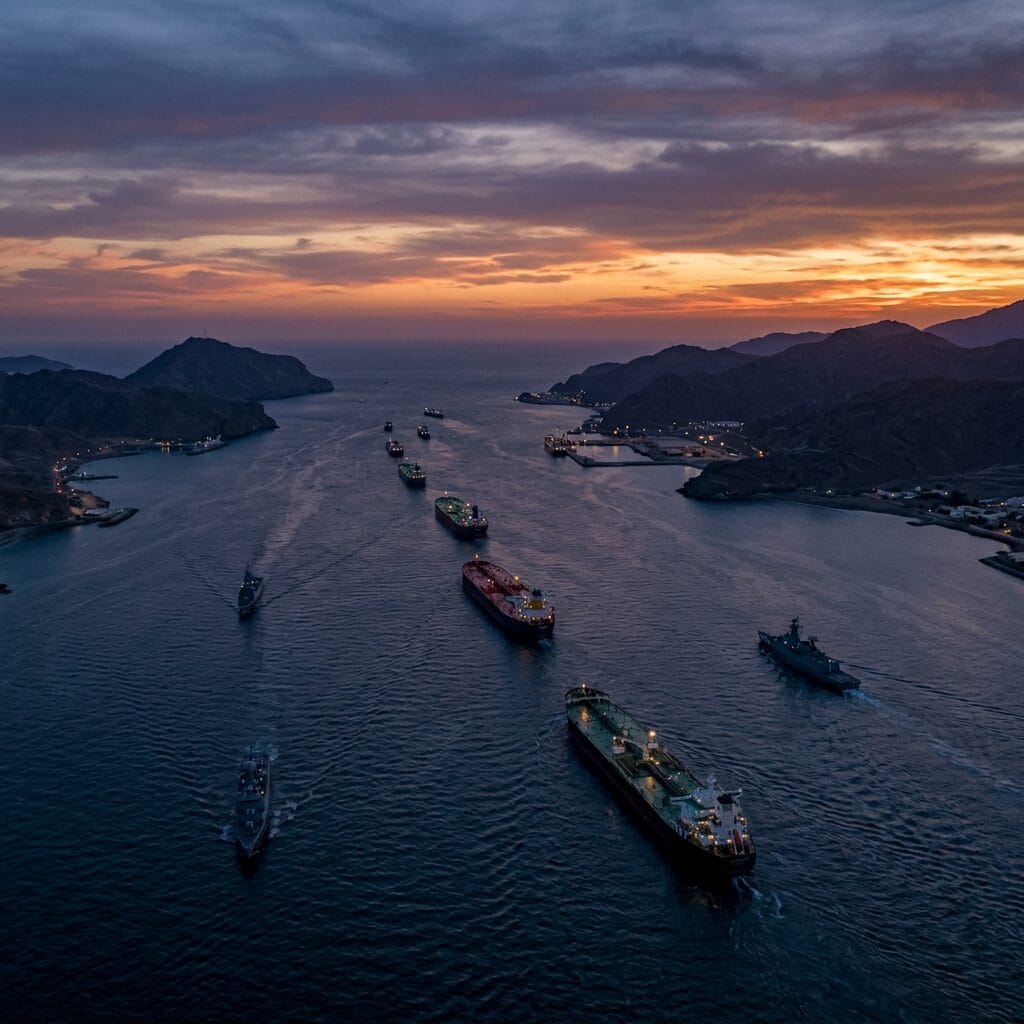
The United States says it is moving toward a tentative ceasefire extension and possible reopening of the Strait of Hormuz.
Then it announces fresh sanctions on Iran’s military-linked oil trade.
That is not a contradiction by accident. It is the real strategy: negotiate with one hand, squeeze with the other. Washington wants Iran to accept a deal, restore shipping, and limit escalation, but it also wants to make clear that Tehran will not be allowed to use oil revenue to rebuild its military power after the war.
This is diplomacy under pressure.
And pressure is still the main language being spoken.
The Sanctions Are a Message to Tehran
The new sanctions target vessels and companies accused of helping move Iranian crude oil and petroleum products to global markets.
That matters because oil revenue is not just money for Iran. It is state power. It funds budgets, military capacity, regional influence, and the ability to resist outside pressure. By targeting the ships and companies tied to that trade, the U.S. is trying to attack the financial bloodstream behind Iran’s military recovery.
The message is simple: even if talks move forward, Iran does not get a free path to rebuild.
This Is Not Peace. It Is Managed Hostility.
The timing is revealing.
Washington and Tehran have reportedly reached a tentative agreement to extend their ceasefire and lift restrictions on shipping through Hormuz. That sounds like progress. But the sanctions show the conflict has not moved into trust. It has moved into management.
The United States is not treating Iran like a normal negotiating partner.
Iran is not treating the United States like a neutral broker.
Both sides are trying to reduce immediate danger without giving up leverage. That is not peace. It is controlled hostility.
Hormuz Is Still the Real Prize
Everything keeps coming back to the Strait of Hormuz.
The war turned one of the world’s most important shipping arteries into a crisis point. The strait normally carries a huge share of global oil and gas flows, and its disruption has shaken markets, raised energy fears, and threatened inflation across the world.
That is why reopening Hormuz matters so much.
It is not only about ships. It is about fuel prices, global trade, central banks, political stability, and whether the world economy can stop living under the shadow of one narrow waterway.
Trump Has Not Approved the Deal Yet
That detail matters.
A tentative agreement is not a final agreement. Until Donald Trump approves it, the whole framework remains vulnerable to political calculation, pressure from allies, hardline critics, and renewed military logic. Trump has to decide whether the deal gives him enough leverage, enough visible success, and enough protection against claims that he went soft on Iran.
That is the political trap.
A deal may be economically necessary, but politically dangerous.
Sanctions Give Trump Cover
The sanctions help solve that problem.
By hitting Iran’s military-linked oil trade, Trump can argue that he is not rewarding Tehran. He can say the U.S. is reopening commerce through Hormuz for the sake of the global economy while still punishing Iran’s military networks. That gives him a tougher posture as negotiations move forward.
In plain terms, the sanctions are not only economic policy.
They are political armor.
Iran Will See This as Bad Faith
From Tehran’s perspective, the sanctions will look very different.
Iran will likely see them as proof that Washington wants concessions while continuing economic warfare. If the U.S. is imposing new penalties at the same time it is negotiating a ceasefire extension, Iranian officials may argue that America is not serious about balanced diplomacy.
That is where the risk lies.
Sanctions may strengthen U.S. leverage, but they can also harden Iranian suspicion. In a fragile negotiation, that suspicion can become dangerous.
The Oil Network Is Global
The sanctions also show how international Iran’s oil trade has become.
The targeted entities include companies tied to Hong Kong and Dubai, while the vessels operate under flags from multiple jurisdictions. That reflects a familiar reality in sanctions enforcement: oil does not move through a simple, transparent chain. It moves through tankers, brokers, shell companies, management firms, flag registries, and commercial networks spread across borders.
Washington is trying to make that system more expensive and risky.
The goal is not necessarily to stop every barrel.
It is to make each barrel harder to move.
China and Gulf Networks Matter
The location of some sanctioned entities is significant.
Hong Kong-linked firms and Dubai-based shipping networks show how Iran’s oil trade intersects with major commercial hubs. That complicates enforcement. The U.S. can sanction companies, but the wider system adapts. New entities can appear. Ships can change names. Routes can shift. Buyers can disguise origin.
That is why sanctions are a constant chase.
They are not a single blow. They are a campaign.
This Could Complicate the Ceasefire
The biggest danger is that sanctions and diplomacy may start pulling in opposite directions.
If Iran believes the U.S. is negotiating while escalating economic pressure, it may slow cooperation on Hormuz. If Washington believes Iran is using talks to preserve oil revenue and rebuild military strength, it may add more sanctions. Each side can justify its own moves as defensive. Each side can see the other’s moves as hostile.
That is how fragile deals break.
Not always through one dramatic collapse, but through layers of mistrust.
The Global Economy Needs the Deal More Than Either Side Wants to Admit
The world does not care about diplomatic pride as much as it cares about movement through Hormuz.
Energy markets need shipping restored. Businesses need predictable fuel costs. Governments need inflation pressure reduced. Consumers need relief from high prices. The longer the crisis drags on, the more damage spreads beyond the Middle East.
That gives the negotiations urgency.
But it also gives both sides leverage, because everyone knows the cost of failure is global.
The Meaning of the Moment
The latest U.S. sanctions show that the Iran crisis is moving into a more complex phase.
The shooting may be reduced. The ceasefire may be extended. Hormuz may be moving toward reopening. But Washington is still using sanctions to weaken Iran’s military financing, and Tehran will likely treat that as continued pressure rather than goodwill.
That is the reality.
The two sides may be negotiating a way out of immediate crisis, but they are not building trust. They are bargaining under threat, economic punishment, and fear of renewed escalation.
A Hormuz deal may still happen.
But these sanctions prove the road to it is lined with pressure.