

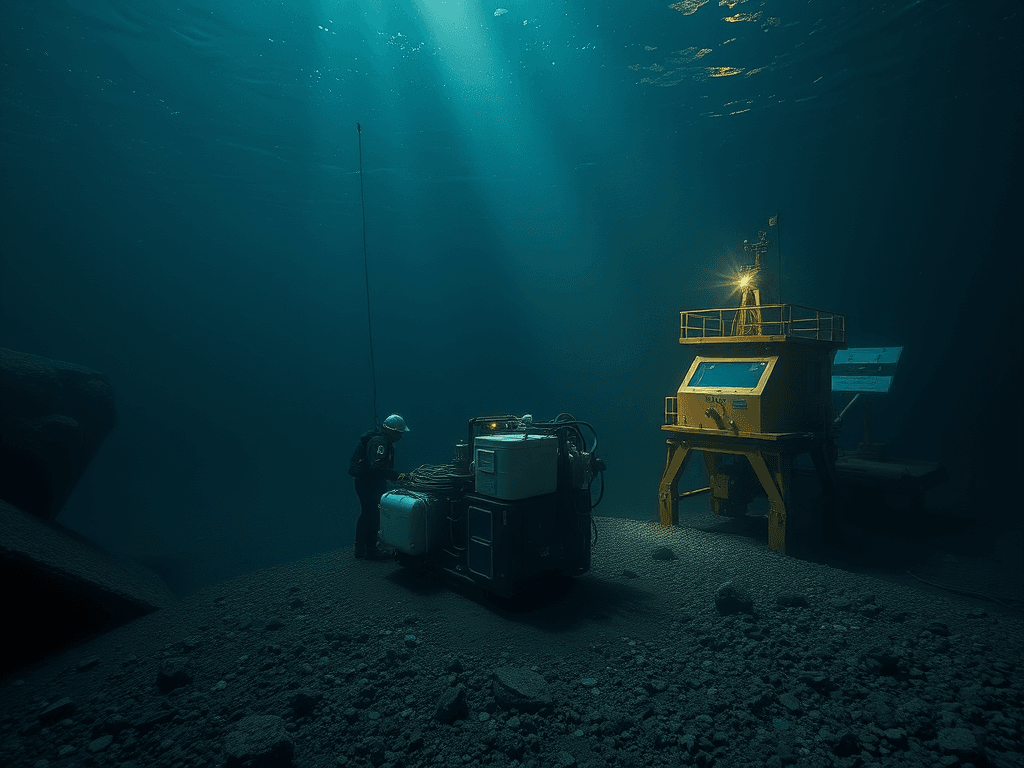
Japan has successfully retrieved rare-earth-bearing mud from the deep seabed in a test mission — a small operational step with outsized strategic implications. In a world where rare earths underpin everything from EV motors and wind turbines to advanced electronics and defense systems, even a proof-of-concept haul from the ocean floor signals something important: the supply-chain map is no longer limited to mines on land.
Why this matters now
Rare earths are less about scarcity in nature than scarcity in reliable, geopolitically stable supply. Processing capacity and industrial choke points have historically been concentrated in China, leaving importers vulnerable to price shocks, export controls, and sudden disruptions. Deep-sea “mud” extraction isn’t an overnight replacement for conventional sources — but it’s a potential pressure-release valve.
The promise: a new source class
The appeal of rare-earth mud is simple in theory:
- it could expand available reserves beyond terrestrial deposits
- it might offer a diversification path for countries trying to “de-risk” supply chains
- it pushes innovation in extraction, lifting, separation, and logistics technologies
If these systems become repeatable and scalable, it could reshape how governments think about strategic stockpiles and long-term industrial planning.
The reality check: seabed mining is hard — and controversial
This isn’t “drill, pump, and ship.” Deep-sea operations come with serious constraints:
- extreme depths and high-pressure environments
- expensive, failure-prone equipment and retrieval systems
- unknown cost curves compared to land mining
- complex refining and separation needs after recovery
And then there’s the biggest friction point: environmental risk. Seabed disturbance can affect poorly understood ecosystems, create sediment plumes, and raise long-term monitoring and accountability questions. Expect any scale-up conversation to collide with conservation groups, regulators, and scientific uncertainty.
What to watch next
This test matters most as a signal of intent. The next real milestones would be:
- repeatable retrieval at larger volumes
- clear economics (cost per ton vs. land alternatives)
- a credible environmental framework (baseline studies + monitoring)
- progress on processing pathways that turn mud into usable rare-earth outputs
Bottom line
Japan’s deep-seabed rare-earth mud retrieval isn’t a supply-chain revolution on its own — but it’s a strategic proof point. The critical-minerals era is forcing countries to explore every option, and the ocean floor is moving from “science project” territory toward “industrial contingency plan.”