

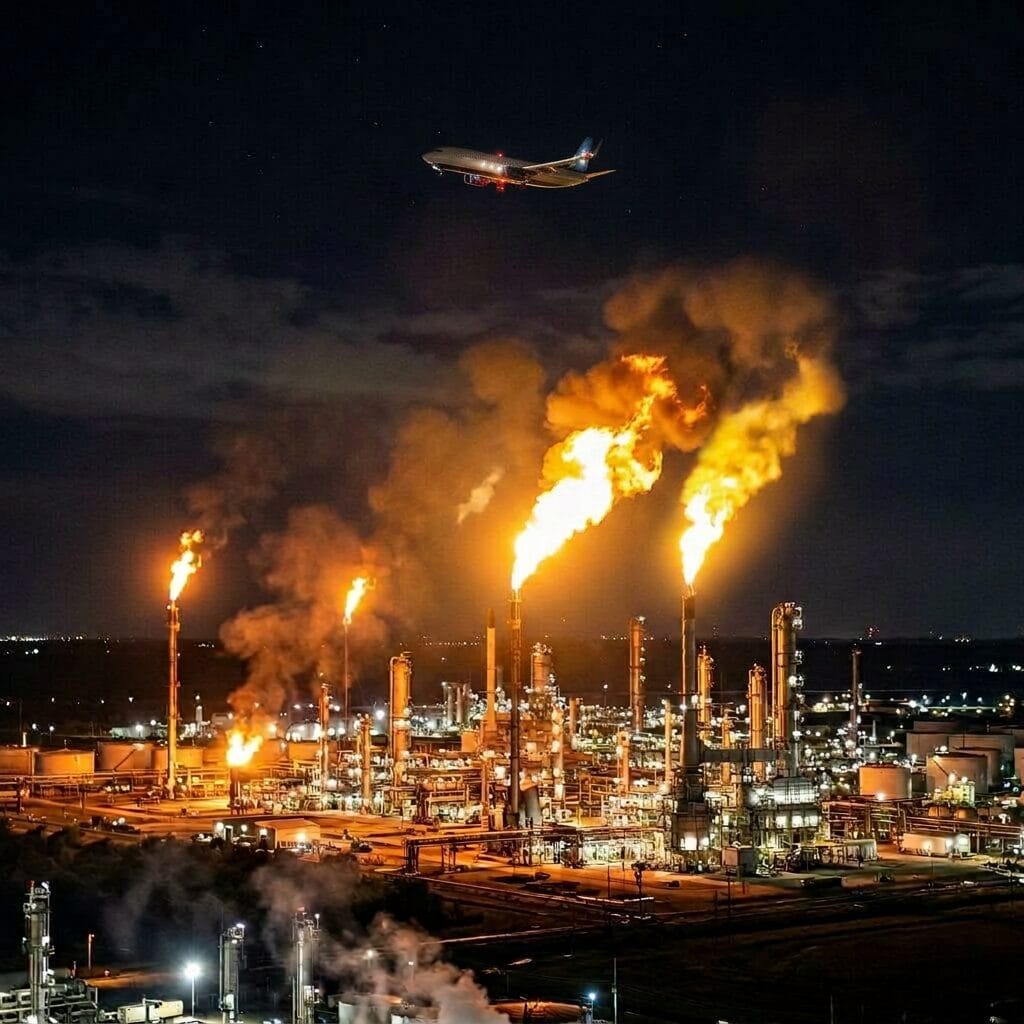
The airline industry is learning the oldest lesson in aviation again.
Planes may sell dreams, but they run on fuel.
Global airlines have slashed their 2026 profit forecast from $41 billion to $23 billion after the Iran war sent fuel costs soaring, disrupted air routes, and exposed how fragile airline margins really are. Passenger demand is still holding up. Revenue is still expected to grow. People still want to travel.
But the math has changed.
And in aviation, fuel math can destroy optimism fast.
Airlines Cannot Fly Around Fuel Reality
Airlines are used to dealing with volatility.
Weather, strikes, aircraft delays, weak currencies, recessions, security scares, and political crises are all part of the business. But fuel is different. It is not a side expense. It is one of the largest operating costs in the entire industry.
When fuel prices jump, everything gets harder.
Ticket prices rise. Margins shrink. Unprofitable routes get cut. Older aircraft become more expensive to operate. Carriers with weak balance sheets start bleeding cash. Passengers may still want to fly, but demand alone does not protect airlines from a fuel shock this large.
That is why the forecast cut matters.
It shows the industry is not dealing with a normal bump. It is dealing with a war-driven cost shock.
The Middle East Crisis Is Now an Aviation Crisis
The Iran war is no longer only a military, diplomatic, or oil-market story.
It is now an airline story.
Airlines depend on stable air corridors, predictable fuel supply, and manageable route costs. The conflict has damaged all three. Flights through or near the Gulf have become more complicated. Rerouting adds time, burns more fuel, and reduces efficiency. Higher oil and jet fuel costs eat directly into profits.
That is the brutal chain reaction.
War raises fuel prices.
Fuel raises operating costs.
Operating costs raise fares.
Higher fares pressure travelers.
Airlines cut capacity.
The whole system becomes tighter and more expensive.
Passengers Will Pay for the War Too
Airlines rarely absorb a shock this big quietly.
Some costs may be swallowed by margins, but much of the pressure eventually lands on passengers. Higher fares are the obvious outcome, especially on routes where demand remains strong and capacity is limited. That means travelers may soon discover that the Iran war is not distant at all.
It may show up in the price of a summer ticket.
It may show up in fewer flight options.
It may show up in longer routes, tighter schedules, and more expensive long-haul travel.
This is how geopolitical crises become household costs.
Demand Is Strong, but That Is Not Enough
The strange part of this moment is that airlines are not facing collapsing demand.
People are still flying. International travel remains resilient. Revenue is expected to keep growing. In normal conditions, that would be good news.
But this is not a normal cost environment.
Strong demand helps airlines raise fares, but it does not erase the fuel bill. It does not fix rerouting. It does not make older aircraft more efficient. It does not solve aircraft delivery delays. And it does not protect weaker carriers from being crushed between higher costs and price-sensitive passengers.
Demand can keep the industry alive.
It cannot make fuel cheap.
Weak Airlines Are in Real Trouble
The biggest carriers may survive this shock.
They have stronger balance sheets, premium travelers, loyalty programs, credit-card partnerships, international networks, and more room to adjust pricing. The weaker airlines have far less protection.
Low-cost and ultra-low-cost carriers are especially exposed because their business model depends on tight cost control, high utilization, and price-sensitive customers. When fuel rises sharply, they cannot always raise fares enough without losing demand. That squeezes them from both sides.
This is where bankruptcies, mergers, shutdowns, and capacity cuts become more likely.
A fuel shock separates strong airlines from fragile ones very quickly.
Aircraft Delivery Delays Are Making the Shock Worse
Airlines would be better prepared if they had newer, more fuel-efficient aircraft arriving on time.
They do not.
Boeing and Airbus delivery delays have already forced carriers to keep older aircraft flying longer than planned. That is now becoming more costly because older planes burn more fuel. In a normal fuel market, that is annoying. In a war-driven fuel spike, it becomes a serious financial problem.
This is the hidden pain inside the forecast cut.
Airlines are paying more for fuel while also being denied the newer aircraft that could help them use less of it.
Middle Eastern Carriers Are Taking the Hardest Hit
The geography of this crisis is obvious.
Middle Eastern carriers sit closest to the disruption. They face route complications, demand uncertainty, higher operational risk, and damage to the very region that has become one of the world’s most important aviation hubs. Gulf airlines built huge business models around connecting continents through the Middle East.
That model depends on stability.
When the region becomes a war corridor, the advantage weakens fast.
This Is a Warning About Globalization
Modern aviation is one of globalization’s clearest symbols.
A passenger can move from Toronto to Dubai, London to Singapore, Doha to Sydney, or New York to Nairobi because airlines built a vast, interconnected system around stable fuel flows, open airspace, and predictable geopolitics.
The Iran war is showing how vulnerable that system really is.
A conflict in one region can raise fares everywhere. A blocked route can reshape global schedules. A fuel shock can cut industry profits almost in half. One strategic waterway or air corridor can affect millions of travelers who never planned to go near the battlefield.
That is globalization’s weakness.
Everything is connected, so everything can be disrupted.
The Industry Is Still Growing, but Less Comfortably
The airline industry is not collapsing.
That matters.
Revenue is still expected to be massive. Passenger demand remains strong. Many airlines will still make money. But the tone has changed. The industry has moved from confidence to caution. From record-profit expectations to damage control. From growth optimism to fuel shock management.
That is a major shift.
The sector is still flying, but it is flying into heavier turbulence.
The Meaning of the Moment
The airline profit forecast cut is a warning that the Iran war has already moved far beyond missiles and diplomacy.
It is now hitting fuel bills, route planning, ticket prices, airline balance sheets, and passenger wallets. The global airline industry can survive shocks, but this one comes at a bad time: supply chains are still strained, aircraft deliveries are delayed, fuel costs are rising, and weaker carriers have little room for error.
The result is simple.
Travel will stay in demand.
But it will become more expensive, less flexible, and harder for airlines to profit from.
The planes will keep flying.
The question is how many passengers, airlines, and routes can afford the cost of keeping them in the air.