


In modern American politics, a powerful movement rooted in End-Times theology has become deeply intertwined with foreign policy in the Middle East. For millions of believers, escalating conflict in the region is not merely a tragedy—it is interpreted as a sign that biblical prophecy is unfolding.
This movement is often described as Christian Zionism—the belief that the modern state of Israel plays a central role in a prophetic timeline that will culminate in the return of Jesus Christ.
For many individuals, this belief remains a private matter of faith. But in the United States it has evolved into something far more consequential: a political force capable of influencing foreign policy in one of the world’s most volatile regions.
Megachurch networks, televangelists, prophecy conferences, media ministries, evangelical groups, and lobbying organizations have mobilized millions of voters around the idea that unwavering support for Israel is not just political loyalty—it is a divine obligation.
Politicians understand this dynamic. As a result, appeals to evangelical voters—from nationally known megachurch pastors to thousands of smaller church communities—have become a familiar and powerful feature of American political rhetoric on the Middle East.
How Prophecy Became Political
The roots of this movement stretch back more than a century.
In the late nineteenth and early twentieth centuries, a theological framework known as dispensationalism began spreading through evangelical churches in the United States. This interpretation of scripture emphasized a literal reading of biblical prophecy and suggested that events in the Middle East would play a central role in the final chapter of human history.
Through prophecy conferences, influential study Bibles, evangelical seminaries, and later through radio ministries and televangelism, these ideas spread rapidly across American religious culture.
By the late twentieth century, millions of believers had come to view conflict in the Middle East through the lens of the Book of Revelation—the belief that escalating wars would ultimately lead to the return of Jesus Christ.
What began as a theological interpretation gradually evolved into a mass political constituency.
History also offers a sobering lesson. Predictions about the imminent “End Times” have appeared repeatedly for centuries. In the nineteenth century, preacher William Miller convinced thousands that Christ would return in 1844—an event that passed into history as the Great Disappointment when the prediction failed. In the twentieth century, evangelist Hal Lindsey popularized the idea that biblical prophecy pointed to an approaching global apocalypse tied to Cold War geopolitics. Later, radio broadcaster Harold Camping predicted the end of the world in 2011, drawing global attention before the date passed without incident.
Across centuries, different preachers have set different timelines, but the pattern remains the same: each generation finds new headlines that appear to confirm the same prophetic expectation.
For many believers these interpretations remain matters of personal faith. The concern emerges when speculative prophetic timelines begin shaping political decisions that carry real-world consequences for millions of people
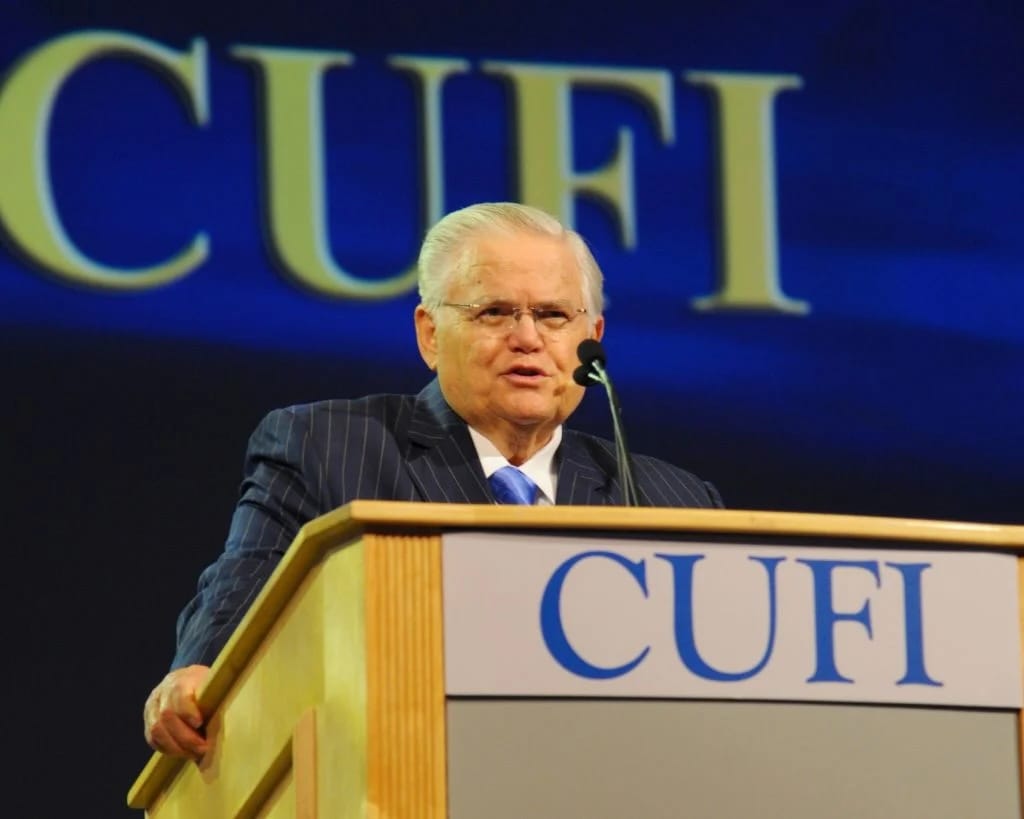

When Theology Enters Statecraft
This is where the danger begins.
When geopolitical conflict becomes wrapped in prophetic expectation, the logic of policymaking quietly shifts. War stops looking like a failure of diplomacy and begins to look like confirmation that prophecy is unfolding. Diplomacy starts to resemble hesitation. Compromise becomes betrayal. Escalation begins to appear not as a risk to be avoided, but as evidence that history is moving toward a divinely scripted climax.
In moments of rising tension in the Middle East, influential megachurch pastors and political leaders have openly urged stronger military confrontation, often framing regional conflict through the language of End-Times prophecy.
Critics increasingly describe this network of megachurch platforms, media ministries, lobbying organizations, and sympathetic politicians as an emerging “apocalypse lobby.” It is not a hidden conspiracy but a visible political force—one that mobilizes millions of voters around the belief that unwavering support for Israel is a religious obligation tied to a prophetic timeline.
Prominent pastors and media personalities have built enormous platforms promoting this worldview, while certain U.S. politicians openly court these constituencies because they represent a massive and reliable voting bloc.
The result is a strange fusion of theology and foreign policy in which geopolitical conflicts are sometimes framed not merely as strategic struggles but as steps within a prophetic narrative.
Critics—including many Christian theologians—argue that this interpretation stands in stark contrast to the teachings of Jesus, which emphasized humility, compassion, and peacemaking rather than the anticipation of apocalyptic war.
The Dangerous Logic of Apocalyptic Politics
The consequences are deeply unsettling.
When war is interpreted as prophecy fulfilled rather than catastrophe avoided, the incentives of policymaking become dangerously distorted. Diplomacy begins to appear weak. Compromise looks like betrayal. Escalation begins to resemble destiny.
There is also a deeply troubling contradiction embedded within some End-Times interpretations. Certain prophetic frameworks predict devastating wars in the Middle East that will bring immense suffering—even to Jewish communities themselves—before divine intervention finally arrives.
Yet the political movements promoting these ideas often portray themselves as Israel’s most unwavering defenders.
This paradox reveals the deeper problem: apocalyptic ideology is a dangerous foundation for foreign policy.
Governments should make decisions based on human welfare, international law, and long-term stability—not on attempts to accelerate prophetic timelines written thousands of years ago.
When prophecy enters statecraft, diplomacy begins to look like doubt and war begins to look like faith. And when prophecy begins shaping political decisions, the line between faith and fanaticism becomes dangerously thin.
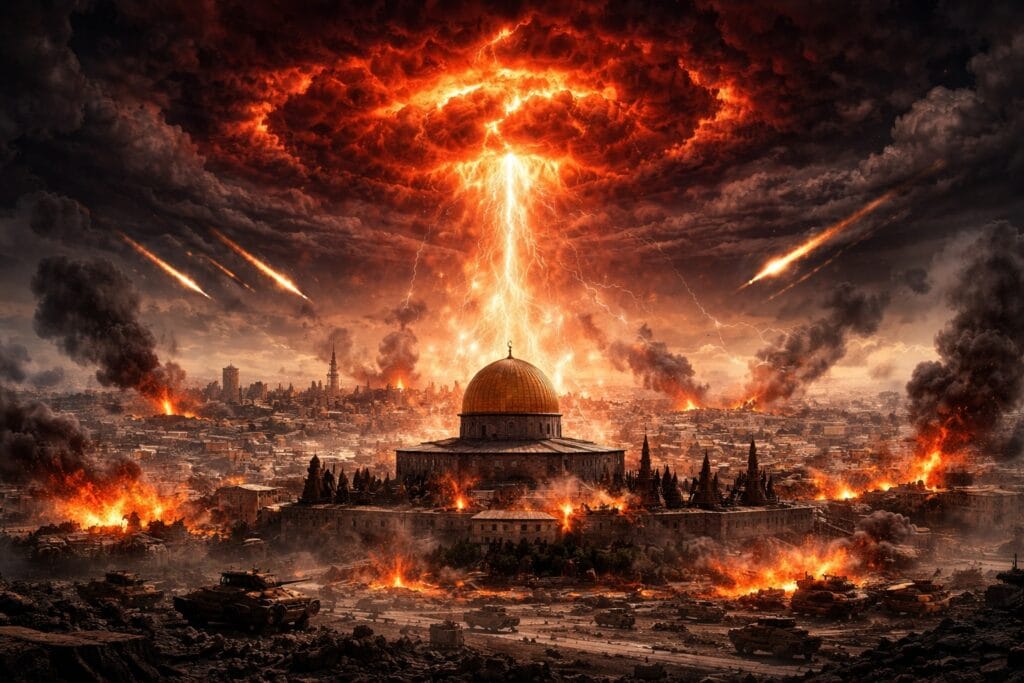
Humanity Cannot Afford Apocalypse Politics
The world already faces enormous challenges: climate instability, nuclear weapons, economic volatility, and rapidly evolving technologies capable of reshaping civilization.
Humanity cannot afford geopolitical decisions driven by the belief that global conflict is part of a divine script.
Faith has inspired extraordinary acts of compassion, justice, and courage throughout history. But when religious narratives begin shaping the policies of powerful nations, something has gone dangerously wrong.
No interpretation of scripture should make human suffering acceptable.
The central question is no longer theological—it is political and moral. Should the foreign policy of powerful nations be influenced by interpretations of prophecy that frame war as part of a divine timeline?
The future of humanity cannot depend on apocalyptic expectations. It must depend on our ability to restrain violence, protect human life, and ensure that the pursuit of peace—not prophecy—guides the decisions that shape our world.
And the future of humanity should never depend on the belief that the world must burn before salvation can arrive.