


Curry Leaves, Fenugreek, and Triphala — Simple Traditions with Modern Relevance
Across India—especially in Kerala—many everyday health practices come not from pharmacies but from the kitchen. Long before wellness trends and supplements became popular, families relied on simple food-based remedies to support digestion, metabolism, and heart health.
Among the most widely used traditional preparations are curry leaves with buttermilk, fenugreek seeds (methi), and Triphala. While these remedies are not substitutes for medical care, research increasingly shows that several of their ingredients contain compounds that may support healthy lipid levels and metabolic balance.
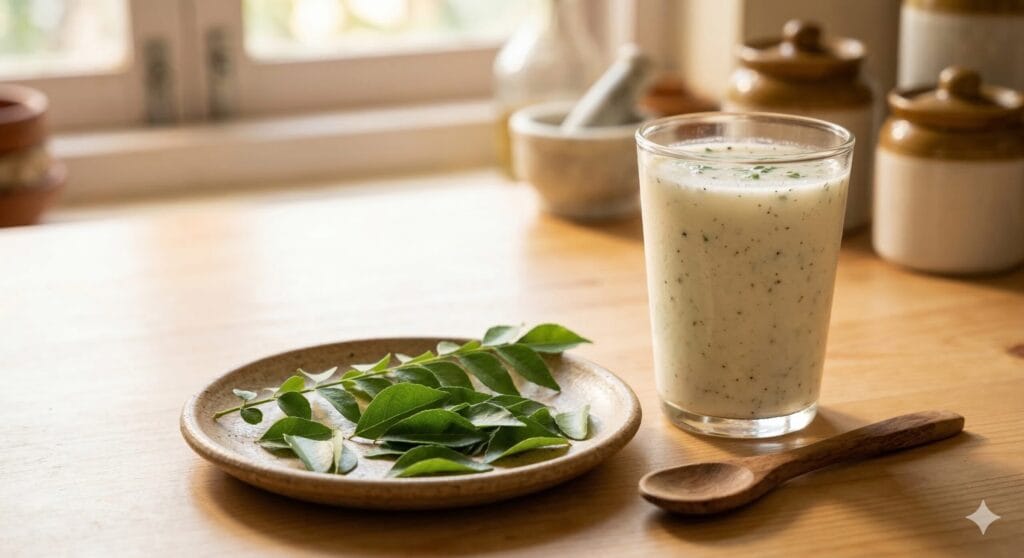
Curry Leaves with Buttermilk
One of the most common household preparations in Kerala is fresh curry leaves ground into buttermilk.
Curry leaves (Murraya koenigii) contain natural plant compounds such as:
- antioxidants
- polyphenols
- carbazole alkaloids
These compounds help reduce oxidative stress, which plays a role in the oxidation of LDL cholesterol—the form associated with plaque buildup in arteries.
Buttermilk (known as moru or chaas) adds additional benefits. As a fermented drink, it supports gut health and digestion, which are increasingly linked to how the body processes fats and sugars.
Traditional Preparation
Ingredients
- 10–15 fresh curry leaves
- 1 glass thin buttermilk
- pinch of roasted cumin powder (optional)
- small amount of crushed ginger (optional)
Method
Grind the curry leaves into a fine paste and mix into the buttermilk. Traditionally it is consumed mid-morning or with lunch.
Many families in Kerala continue using this preparation as a simple daily health habit.

Fenugreek (Methi) for Metabolic Health
Fenugreek seeds have been used in Indian kitchens for centuries and are well known for their impact on blood sugar and lipid metabolism.
Fenugreek contains:
- soluble fiber
- saponins
- the amino acid 4-hydroxyisoleucine
These compounds may help improve insulin sensitivity and triglyceride levels, which are closely tied to metabolic health.
Traditional Use
A common preparation is fenugreek water.
Soak one teaspoon of fenugreek seeds overnight in a glass of water. In the morning, drink the water and chew the softened seeds.
This simple practice is still widely used in many households.

Triphala for Long-Term Metabolic Balance
Triphala is a classical Ayurvedic preparation made from three fruits:
- Amla (Indian gooseberry)
- Haritaki
- Bibhitaki
Traditionally it is used to support digestion and gut health. Some modern studies suggest Triphala may help improve cholesterol markers and triglyceride levels, likely due to its high polyphenol and antioxidant content.
Traditional Use
Triphala is commonly taken as a powder.
Mix ½ to 1 teaspoon in warm water before bed.
It is often used as a gentle long-term digestive support.
The Foundations of Heart Health
While traditional remedies can play a supportive role, the strongest evidence for healthy cholesterol still comes from everyday lifestyle choices.
Eat more soluble fiber
Oats, lentils, beans, and chickpeas help remove cholesterol from the digestive system before it enters the bloodstream.
Choose healthier fats
Replacing saturated fats with sources like nuts, seeds, olive oil, and avocados supports healthier lipid balance.
Stay active
Regular movement—such as 30 minutes of brisk walking most days of the week—helps the body process fats more efficiently.
The Wisdom of Simple Habits
The value of these traditional remedies lies not in dramatic short-term effects but in consistent daily practice.
For generations across India, simple ingredients—curry leaves, fenugreek seeds, and Triphala—have been used as part of everyday life to support digestion and metabolic balance.
In many ways, modern nutrition science is rediscovering what traditional kitchens have quietly practiced all along: sometimes the most meaningful health habits begin with the simplest foods.