

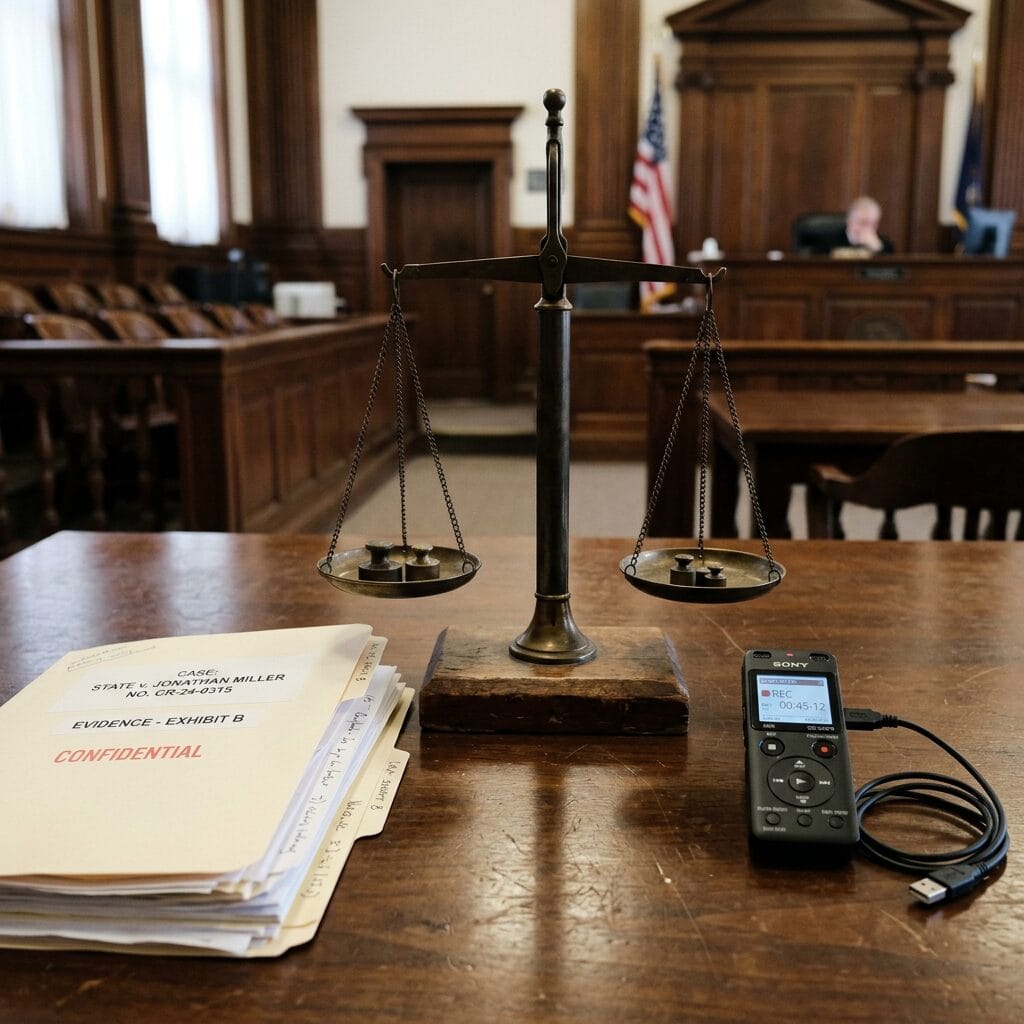
Joe Biden is suing the Justice Department to stop the release of audio recordings and transcripts tied to the special counsel investigation into his handling of classified documents.
On the surface, this is a legal fight over disclosure.
In reality, it is much bigger than that.
It is about privacy, political humiliation, selective transparency, and the way Washington turns old age, memory lapses, and criminal investigations into weapons for the next campaign season.
This Is Not Just About Documents
The files at the center of the lawsuit involve Biden’s interviews at his home in 2016 and 2017 with Mark Zwonitzer, the ghostwriter who worked with him on his memoirs.
Those recordings and transcripts were later examined by special counsel Robert Hur during the investigation into Biden’s retention of classified material from his time as senator and vice president. Hur ultimately recommended no criminal charges, saying there was not enough evidence to successfully prosecute.
But the report also did something politically explosive: it questioned Biden’s age, memory, and mental competence.
That is why these recordings matter so much.
They are not just evidence anymore. They are political ammunition.
Biden’s Privacy Argument Is Real
Biden’s lawyers argue that releasing the files would be an unwarranted invasion of privacy.
That argument should not be dismissed casually.
A former president still has privacy interests, especially when the government obtains personal conversations through a criminal investigation and then considers releasing them to political actors. The fact that Biden held office does not mean every private conversation in his home automatically becomes fair game for public spectacle.
There is a serious principle here.
If the Justice Department can collect private material during an investigation, decline to bring charges, and then release that material into a politically charged environment, future witnesses and public officials may have reason to fear that cooperation can later become exposure.
That is not a small concern.
But the Transparency Argument Is Also Real
At the same time, Biden’s opponents will argue that the public has a right to see and hear material tied to a major special counsel investigation involving classified documents.
That argument is not absurd either.
Biden was president. The investigation concerned classified materials. The special counsel’s report became part of a national debate over whether Biden received softer treatment than Donald Trump. In that environment, withholding the audio and transcripts will only deepen suspicion among critics who already believe the Justice Department protected Biden.
This is the trap.
Privacy may be legally valid, but politically it looks like concealment.
The Audio Is More Dangerous Than the Transcript
The fight over audio matters because sound carries political force that text does not.
A transcript can show words. Audio shows hesitation, tone, confusion, confidence, frailty, emotion, and pace. That is why political operatives want it so badly. They are not merely looking for facts. They are looking for moments.
A pause can become an ad.
A stumble can become a clip.
A confused answer can become a week of cable news.
That is the ugly power of recorded speech in modern politics. It does not need to prove criminal misconduct to do damage. It only needs to create an image.
Hur’s Report Already Did Political Damage
Hur’s report was legally favorable to Biden in one sense: no charges.
But politically, it was devastating.
The report’s description of Biden as forgetful and its focus on his age became one of the most damaging narratives of his presidency. It fed public doubts about his fitness, strengthened Republican attacks, and gave critics a government-authored document to point to when questioning his capacity.
That is why Biden’s team is fighting so hard now.
They know the release of audio could reopen the same wound with even more force.
Republicans Will Call This a Cover-Up
Republicans are likely to frame the lawsuit in the simplest possible terms: Biden is hiding the truth.
That line will be politically effective because it fits a narrative they have pushed for years. They argue Biden was given a pass by his own Justice Department while Trump was aggressively prosecuted over classified documents. Whether that comparison is fair or not, the release fight gives them fresh material.
For Republicans, the audio is not just evidence.
It is a potential campaign weapon wrapped in the language of accountability.
Democrats Will Point to Cooperation
Democrats will answer with a different contrast.
They will argue that Biden cooperated with investigators, sat for interviews, allowed searches, and did not obstruct the process, while Trump was accused of refusing to return classified documents requested by the National Archives and obstructing efforts to retrieve them.
That contrast matters.
But it may not fully solve the political problem. In the modern media environment, legal distinctions often lose to emotional impressions. A careful explanation of cooperation versus obstruction may be accurate, but it is less viral than a damaging audio clip.
That is the danger Democrats see.
The Justice Department Looks Politicized Either Way
This is the impossible position the Justice Department keeps finding itself in.
If it releases the material, Biden’s side will say the department is feeding a partisan spectacle. If it withholds the material, Republicans will say the department is protecting Biden. Either path reinforces someone’s claim that the Justice Department is acting politically.
That is the deeper institutional damage.
In today’s America, even legally defensible decisions are immediately absorbed into partisan warfare.
The Heritage Foundation’s Role Matters
The fact that the Justice Department reportedly planned to release the files not only to Congress but also to the Heritage Foundation makes the politics even sharper.
This is not a neutral academic archive. Heritage is a major conservative institution with deep influence in Republican politics. Releasing sensitive investigative material to such a group would inevitably be seen by Biden’s side as politically loaded, especially when the material concerns his age, memory, and classified documents.
That may become one of the most important parts of the case.
The question is not only whether the public can see the material.
It is who gets it, when, and why.
This Case Is About the Future Too
The larger issue goes beyond Biden.
If investigative files involving private conversations can be released after no charges are filed, future presidents, vice presidents, cabinet officials, and witnesses may think differently about cooperation. They may fear that anything they say, even in a non-criminal context, could later be turned over for political use.
That could weaken trust in investigations.
It could also make public officials more guarded, more lawyered-up, and less cooperative.
That is bad for accountability.
The Meaning of the Moment
Biden’s lawsuit sits at the intersection of law, privacy, transparency, and raw political combat.
There are legitimate questions on both sides. The public has an interest in understanding how classified-document investigations are handled. Biden has a legitimate interest in protecting private conversations collected during a criminal probe that did not lead to charges.
But the real reason this fight matters is simpler.
Everyone knows what the audio could become.
Not just evidence.
Not just history.
A weapon.
And in Washington, once something can be weaponized, the battle over who controls it becomes almost inevitable.