

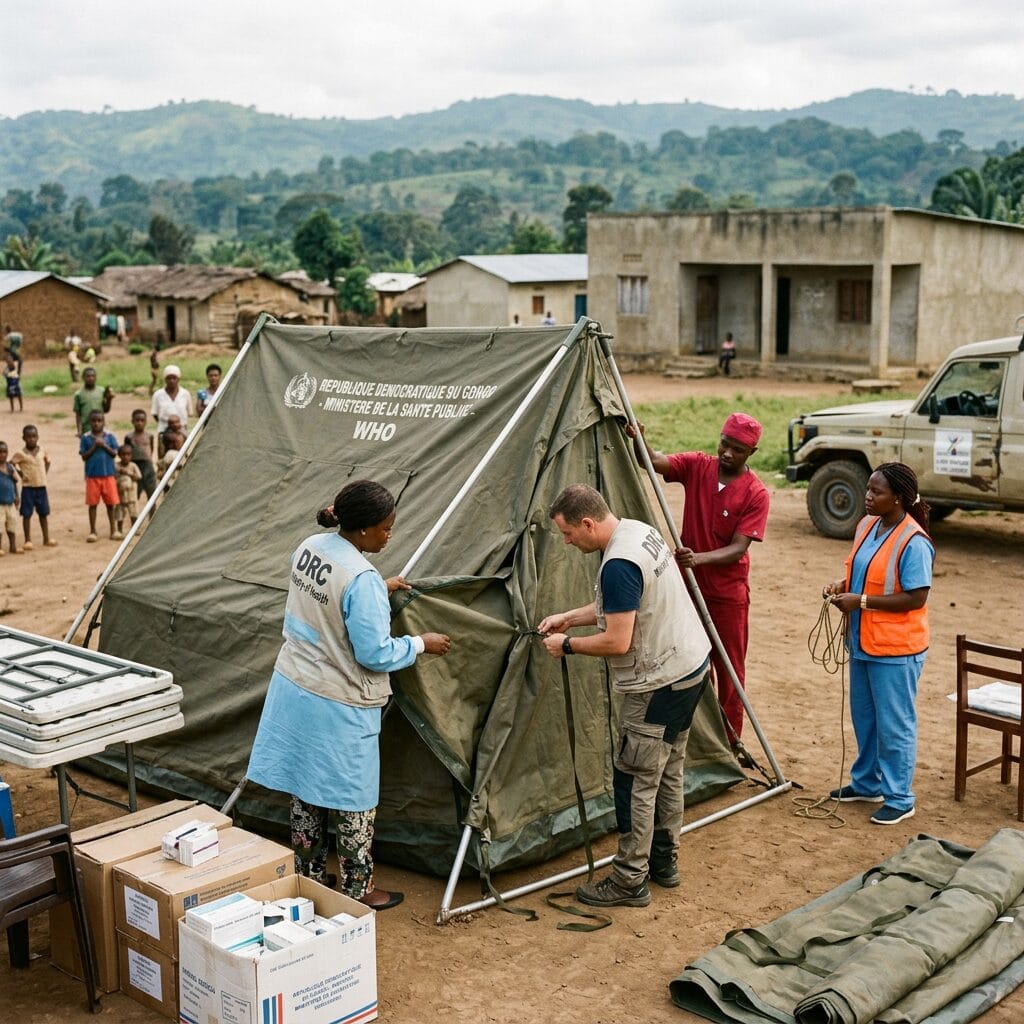
When the head of the World Health Organization flies into an outbreak zone, the message is clear: this is no longer a distant health alert.
It is an emergency.
Tedros Adhanom Ghebreyesus is heading to the Democratic Republic of Congo as a fast-moving Ebola outbreak strains the world’s ability to respond. That alone should command attention. Congo has defeated Ebola before, many times. But this outbreak is different in the ways that matter most: it is spreading fast, it involves a rare strain with no approved vaccine or treatment, and it is unfolding in a region already damaged by war, displacement, fear, and weak health infrastructure.
Ebola is dangerous in any setting.
In eastern Congo, it becomes a nightmare.
Congo Knows Ebola, but Familiarity Is Not Protection
Congo has faced Ebola repeatedly.
That history gives the country deep experience, scientific knowledge, and local courage. But it also brings exhaustion. Communities have seen isolation wards before. They have seen burial teams. They have seen fear turn neighbors against health workers. They have seen outbreaks become mixed with rumor, politics, and grief.
Experience helps.
It does not make the virus easy.
The fact that Congo has beaten Ebola 16 times before should inspire confidence. But the 17th outbreak still has to be fought in real time, with real supplies, real access, real testing, real trust, and real protection for health workers.
History does not stop transmission.
Action does.
The Outbreak Is Outpacing the World
The most alarming phrase in this story is that the outbreak is outpacing the response.
That means the virus is moving faster than testing, tracing, isolation, and treatment can keep up. In an Ebola outbreak, that is the danger zone. Every delayed diagnosis gives the virus more room. Every missed contact becomes another possible chain of infection. Every under-equipped clinic becomes a weak point.
This is how outbreaks expand.
Not through one failure, but through many small delays stacking on top of one another until the response is chasing the disease instead of surrounding it.
The Bundibugyo Strain Raises the Stakes
This outbreak involves the Bundibugyo strain of Ebola.
That matters because there is no approved vaccine or treatment specifically available for it. The world has made major progress against other Ebola strains, especially Zaire Ebola. But that progress does not automatically transfer cleanly to Bundibugyo. That leaves responders leaning harder on the oldest and hardest tools of outbreak control: fast testing, isolation, protective equipment, contact tracing, safe burials, and community cooperation.
Those tools work.
But only when they arrive early enough, with enough funding and trust.
Testing Is Now the Battlefield
WHO says it is scaling up testing with Congo’s national medical research authorities.
That is essential.
Without testing, officials are fighting shadows. They cannot know where the virus is, who has it, where it is moving, or whether suspected cases are part of the same chain. Testing turns fear into information. Information turns chaos into a map. And a map is what responders need before they can break transmission.
But scaling up testing in eastern Congo is not simple.
Roads are difficult. Security is unstable. Communities may distrust outsiders. Clinics may lack supplies. Health workers may be exposed. Samples must move safely. Results must come quickly enough to matter.
Every hour counts.
Conflict Is Helping the Virus
This is the part the world cannot ignore.
Eastern Congo is already facing violence, displacement, armed groups, and fragile public services. That is the perfect environment for an outbreak to become harder to control. People flee fighting. Families crowd into camps. Health workers struggle to move. Aid groups face access problems. Rumors spread. The sick may hide symptoms. Burial practices can become flashpoints.
Disease and conflict feed each other.
War pushes people into conditions where viruses spread faster. Outbreaks then make an already broken humanitarian situation even worse.
That is why WHO’s call for urgent action is not just medical.
It is political and humanitarian.
Health Workers Are Once Again on the Front Line
Ebola always threatens the people trying to stop it.
Doctors, nurses, lab workers, ambulance teams, burial teams, cleaners, and community health workers face enormous risk. They are the ones entering rooms others fear to enter. They are the ones handling bodies, samples, fever cases, and families desperate for answers.
If they are not protected, the response collapses.
A serious Ebola response must begin with protecting frontline workers: equipment, training, pay, transport, security, and psychological support. They cannot be treated as expendable heroes. They are the wall between the virus and wider spread.
Community Trust Is Not Optional
Ebola control is not only science.
It is trust.
People have to believe that treatment centers are meant to help, not harm. Families have to believe that safe burials still respect dignity. Communities have to believe that reporting symptoms will not bring punishment, stigma, or disappearance. Local leaders, faith leaders, survivors, and health workers must be part of the response.
Without trust, people hide.
When people hide, Ebola wins.
The World Cannot Wait for Rich Countries to Feel Threatened
One of the ugliest patterns in global health is delay.
An outbreak begins in a fragile region. Local responders warn that it is growing. Funding is slow. Supplies lag. International attention flickers. Then the disease crosses borders, affects foreigners, or threatens wider travel — and suddenly the world discovers urgency.
That pattern has to end.
Stopping Ebola in Congo is not charity. It is global health security. It is moral responsibility. It is also basic common sense. Outbreaks are easier, cheaper, and less deadly to stop early than late.
Travel Bans Alone Will Not Stop Ebola
Several countries have already moved toward travel restrictions, quarantine measures, and border controls.
Some precautions may be necessary. But border measures cannot replace outbreak control at the source. Ebola is stopped by finding cases, isolating the sick, tracing contacts, protecting health workers, funding response teams, and building trust in affected communities.
A border policy may reduce risk abroad.
It does not save the village where the virus is spreading today.
If wealthy countries only build walls while underfunding the frontline response, they are not solving the problem. They are moving fear around.
The Real Test Is Speed
The WHO chief’s trip matters because it signals urgency at the top.
But the real test is what follows: more testing, more supplies, more funding, more access, more protection for health workers, more community engagement, and more regional coordination with Uganda and other neighboring countries.
Words will not stop Ebola.
Systems will.
And those systems need to move faster than the virus.
The Meaning of the Moment
Tedros’ visit to Congo is not a symbolic trip. It is a warning.
The outbreak is moving fast. The response is strained. The strain is difficult. The region is unstable. The human cost is rising. Congo has beaten Ebola many times before, but this outbreak is testing whether the world has learned the basic lesson of every epidemic: delay is deadly.
Ebola can still be contained.
But containment will not come from speeches, travel bans, or distant concern alone.
It will come from speed, trust, money, protection, science, and the courage to act before the numbers become even worse.